
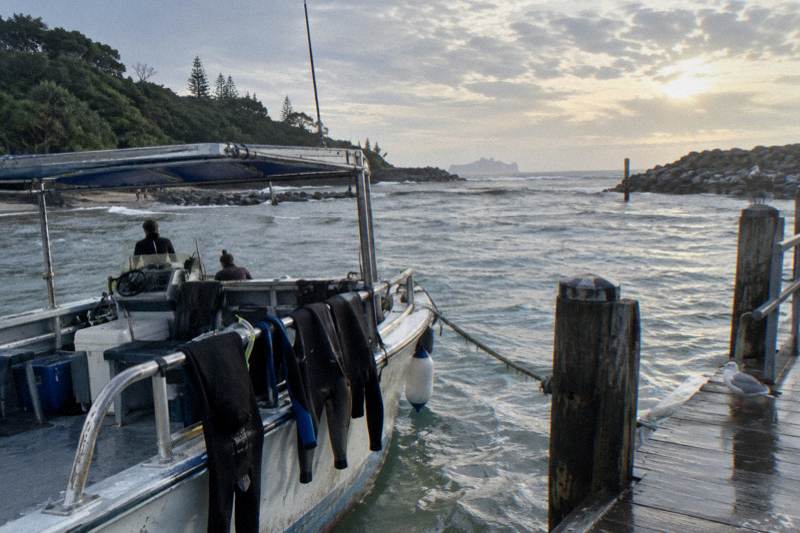

Julian Rocks Snorkelling Off Byron Bay, Where The Warm Current Meets Cool Water
Julian Rocks snorkelling happens over a shallow reef about 2.5 km off Byron Bay, reached by a boat run of minutes inside Cape Byron Marine Park. Compare trips and book through the listings.
- A$94Lowest From-Price
- 7Julian Rocks Trips Listed
- 448Reviews, Top Trip
Most-Booked Julian Rocks Snorkelling Trips Off Byron Bay
Most-Booked Julian Rocks Snorkelling Trips Off Byron Bay
Four listings cover the snorkel roster on this site, and the ranking below is a reading of the listings themselves, not a verdict on water quality or guiding. Review count is a blunt instrument. It reflects who has sold through the booking platform longest, not whose boat finds more turtles.
Blue Seafaris sits first on review volume alone: 4.5 from 448 reviews, from A$94 per person, 2.5 hours, checking in at Brunswick Heads Boat Harbour. Out Of The Blue Adventures follows at 4.4 from 167 reviews, also from A$94, also 2.5 hours, also out of Brunswick Heads. The two ratings sit close enough that the meeting point, 15 minutes north of Byron Bay town, is often the deciding factor between them.
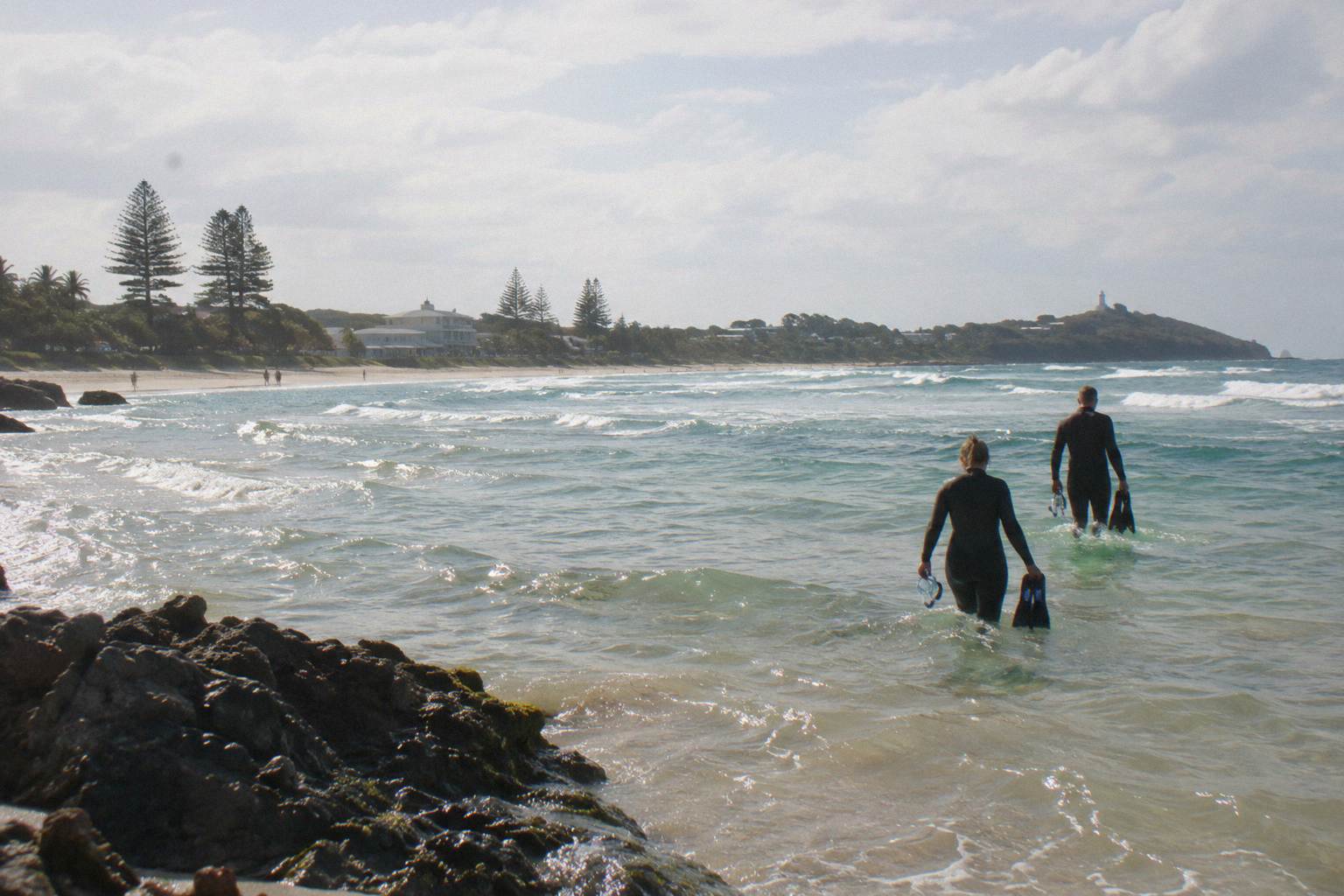
The Byron-town options run longer. Turtle School, a division of Byron Bay Dive Centre, lists a 3-hour trip with a Byron Plaza, Jonson Street meeting point and a turtle focus; its rating and price are on the listing. The Turtle-Focused Snorkel from Byron town is the same operator's second card here, differing mainly by its meeting point at the dive centre itself. Neither prints a from-price on this page, so compare the booking pages directly before choosing.
All four go to the same place: Nguthungulli Julian Rocks, about 2.5 km off Cape Byron inside Cape Byron Marine Park. What varies is drive time, trip length and price. The table above carries the printable figures.
Three Questions, One Boat: Choosing Julian Rocks Snorkelling For Your Group
A starting shortlist of the best-reviewed trips. Tap an answer to rebuild it.
From-Price On The ListingA$94adult, per person
Rating4.5across 448 reviews
Listed Length2 hours 30 minutesper the listing
CancellationFreeup to 24 hours ahead
StartBrunswick Heads Boat Harbourper the listing
Three Questions, One Boat
Picking a Julian Rocks snorkelling trip comes down to three practical questions, and every one of them is answered on the listing before money changes hands.
First, length. The Brunswick Heads trips, Blue Seafaris and Out Of The Blue, list 2.5 hours each, with the boat ride to the rocks taking about 15 minutes each way per the listings. The Byron-town Turtle School trip lists 3 hours. Time actually in the water is about 1 hour on the operator descriptions, so the extra half hour on the longer trips is mostly check-in, gear and the ride.
Second, where you are staying. Brunswick Heads Boat Harbour is 15 minutes north of Byron Bay, which matters if you are based in town without a car. The Turtle School meeting point at Byron Plaza, Jonson Street, is walkable from central Byron; Byron Bay Dive Centre runs transport from its central meeting point to The Pass, from where the vessel departs. Sundive, which sells direct rather than through this roster, shops at 9-11 Byron Street.
From-Price On The ListingA$94adult, per person
Rating4.4across 167 reviews
Listed Length2 hours 30 minutesper the listing
CancellationFreeup to 24 hours ahead
StartBrunswick Heads Boat Harbourper the listing
Third, what the trip emphasises. Turtle School sells itself on turtles, which are year-round residents at the rocks: green, hawksbill and loggerhead. No operator guarantees them. The Brunswick Heads trips are general reef trips through the shallow sheltered areas, 3 to 12 m deep, where turtles, rays and colourful fish all show up.
The picker above sorts the roster on these filters: duration, meeting point and category. Use it before reading any single listing in full, because the differences are logistical more than anything else.
Who Is On The Boat With You
The single biggest trap in booking Julian Rocks snorkelling is treating the age limits as one rule. They are three rules, set by each operator, and they range widely.
Wild Byron takes children from 5, provided they can swim. Sundive starts at 7, requires kids aged 7 to 18 to be accompanied by an adult guardian, and asks that everyone hold previous open-ocean snorkel experience plus the ability to swim 200 m unassisted. Byron Bay Dive Centre sets its minimum at 10. None of this is negotiable on the day, and the booking page enforces it at checkout.
Listed Length3 - 4 hoursper the listing
CancellationFreeup to 24 hours ahead
StartByron Plaza, Jonson Streetper the listing
ProviderTurtle School (Byron Bay Dive Centre)named on the listing
Swim confidence matters more than age at this site. Julian Rocks is open ocean: strong swells, currents, surges, cold water and winds are all listed as possible conditions on the operator pages. Sundive's water-temperature note puts winter at a drop to 17 °C, averaging around 20 °C, which explains the 5 mm long wetsuits Byron Bay Dive Centre advises for the duration of the trip.
Nervous snorkellers are catered for, quietly. Byron Bay Dive Centre keeps lifejackets on board and suggests a long wetsuit or a pool noodle for anyone uneasy in the water; that is its own policy, not a universal one. Sundive requires GP clearance for over 65s.
For families, the choice is mostly Wild Byron for the youngest children. For turtle-focused trips with older kids, the Byron-town options apply.
Listed Length2 hours 30 minutesper the listing
StartByron Bay Dive Centreper the listing
ProviderByron Bay Dive Centrenamed on the listing
Snorkel Shallows Or Dive Trenches: What Julian Rocks Snorkelling Shows Against Scuba
- Depth
- Shallow sheltered areas, 3 to 12 m
- Time In The Water
- About 1 h; 1.5 h on the Brunswick Heads listings
- Entry Requirement
- Swim comfortably in open ocean
- Grey Nurse Sharks
- Rarely seen
- Depth
- Trench dives, 8 to 24 m
- Time In The Water
- 50 min on the Fun Dive
- Entry Requirement
- Open Water certification
- Grey Nurse Sharks
- In the trenches, June to November
Snorkel Shallows Or Dive Trenches
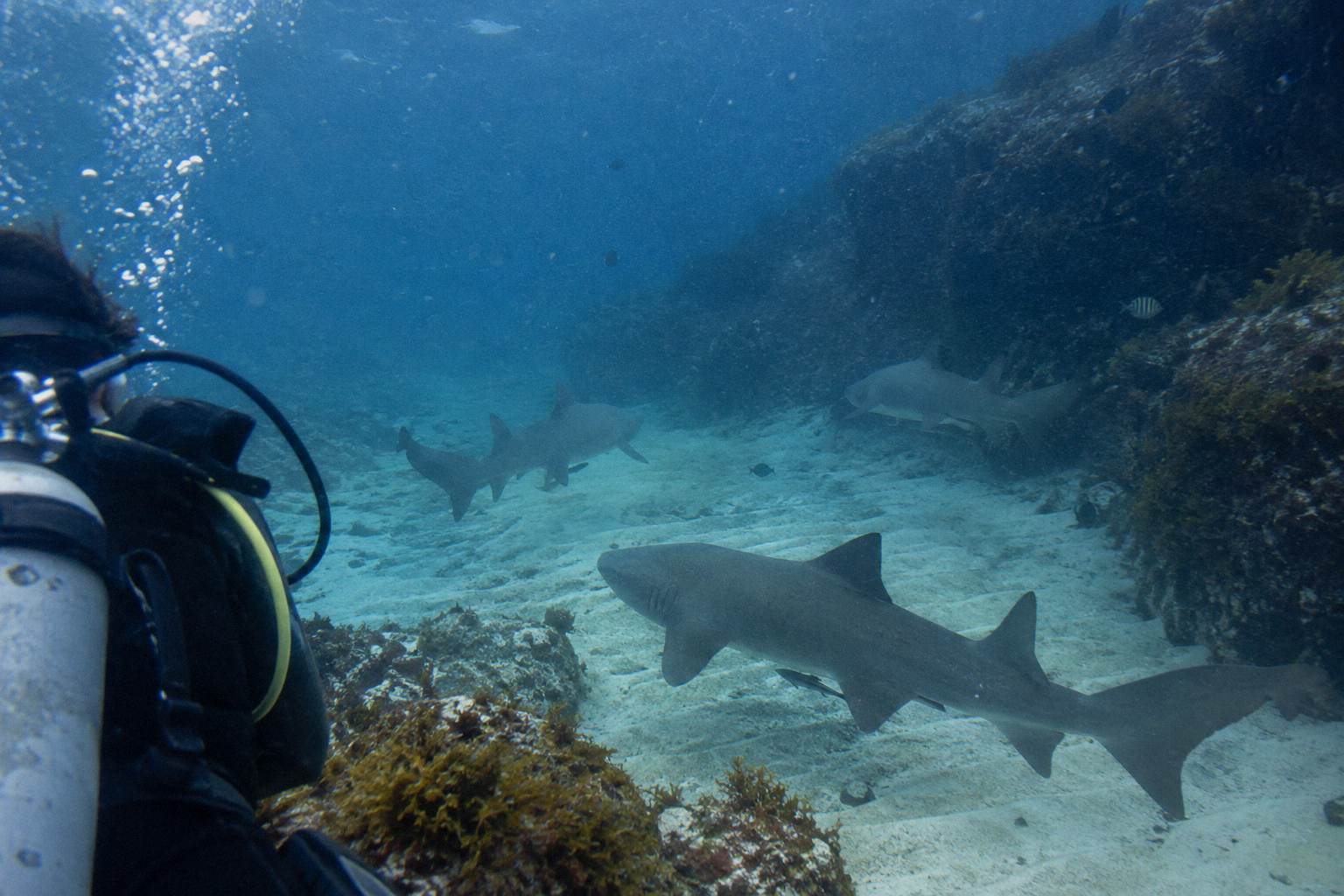
Julian Rocks snorkelling and diving at the same site are two different experiences, and the comparison table above lays the columns side by side. The short version: snorkel trips work the shallow sheltered areas, 3 to 12 m deep, while divers drop into the sand trenches at 8 to 24 m.
What the shallows hold is plenty. Turtles, rays, a variety of colourful fish and crustaceans are the listed snorkel sightings, and the shallow zones sit where light reaches the bottom. Wobbegongs, bull rays, eagle rays and shovelnose rays are year-round residents around the Needles and the Line of Smiles, both described as dive sites, though the rays pass through snorkel depth too. Turtles are green, hawksbill and loggerhead, present year-round, and common enough that an operator names a whole tour after them while still refusing to guarantee one.
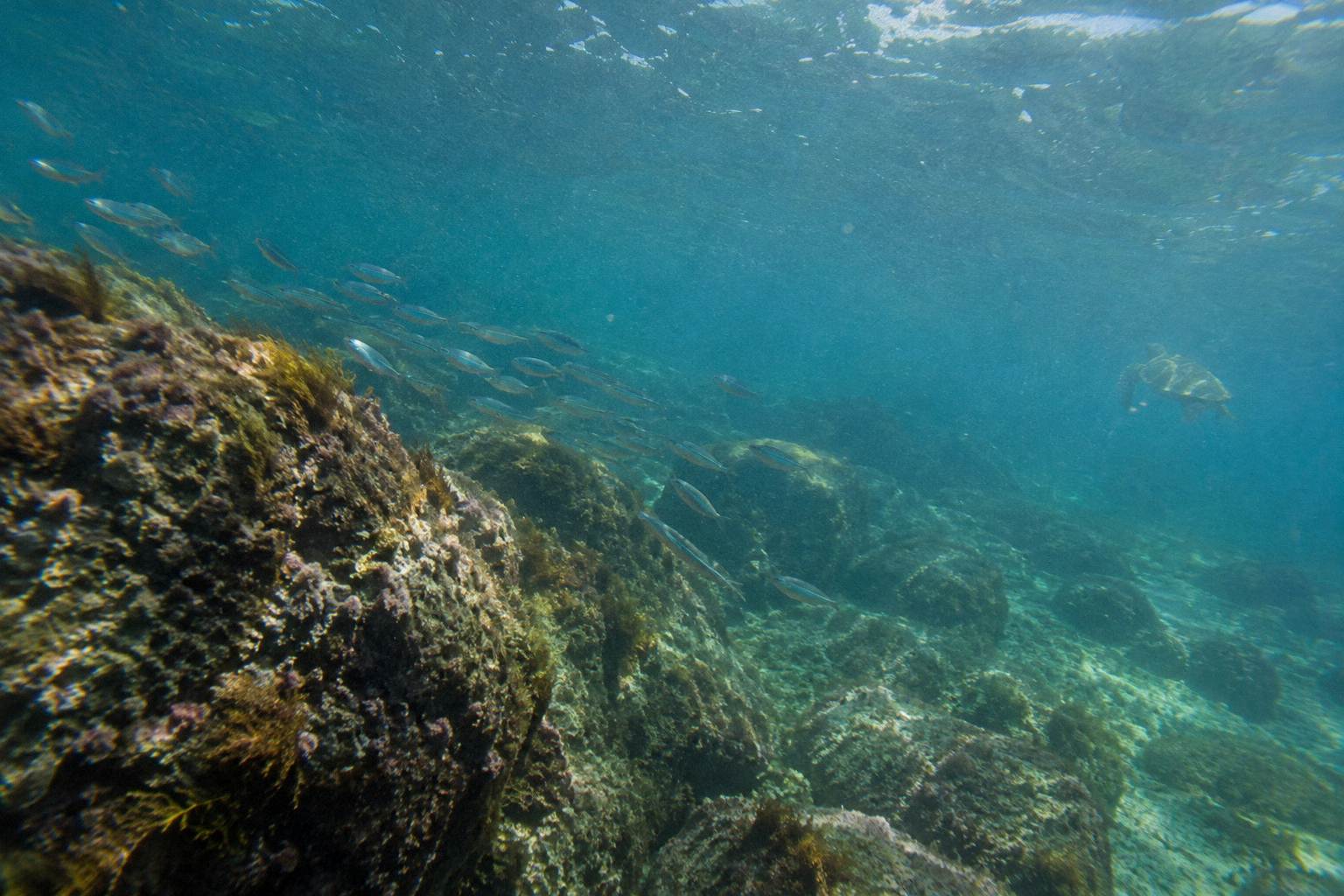
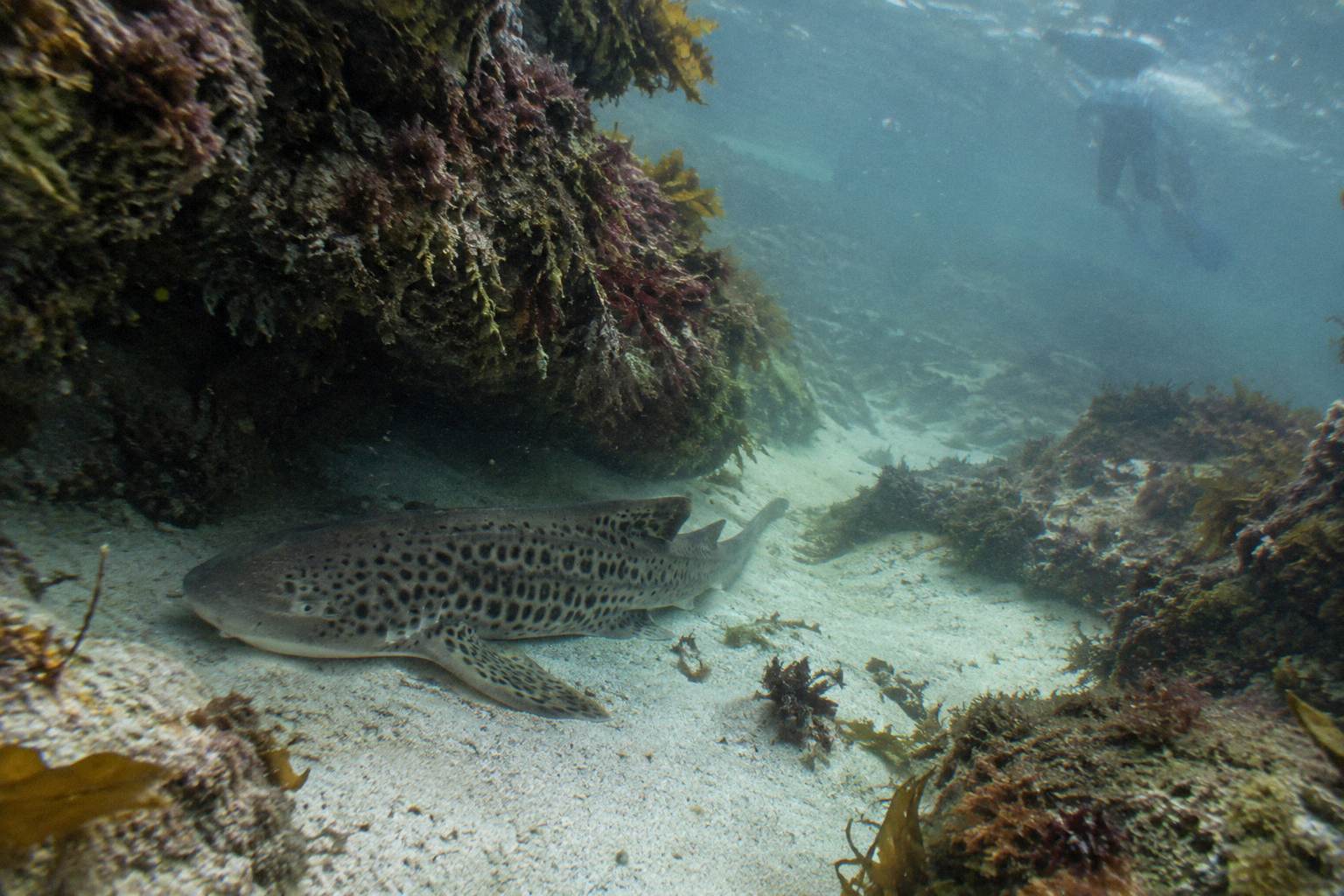
What the trenches hold is the bigger animal list. Grey nurse sharks, a threatened species named in the marine park's own user guide, gather in the colder months. Sundive places leopard sharks mostly in the Needles sandy arena from December to April. Divers at 8 to 24 m see this layer; snorkellers on the surface mostly do not.
Entry requirements split the two as well. Snorkel trips ask that participants swim comfortably in open ocean. Depth is the whole story here: pick the shallows for surface colour and turtles, the trenches for the shark season.
The Grey Nurse Season And What Snorkellers Actually See
Every winter, grey nurse sharks gather in the sand trenches around Nguthungulli Julian Rocks, and every winter some snorkellers arrive expecting to meet them. The facts do not support that expectation.
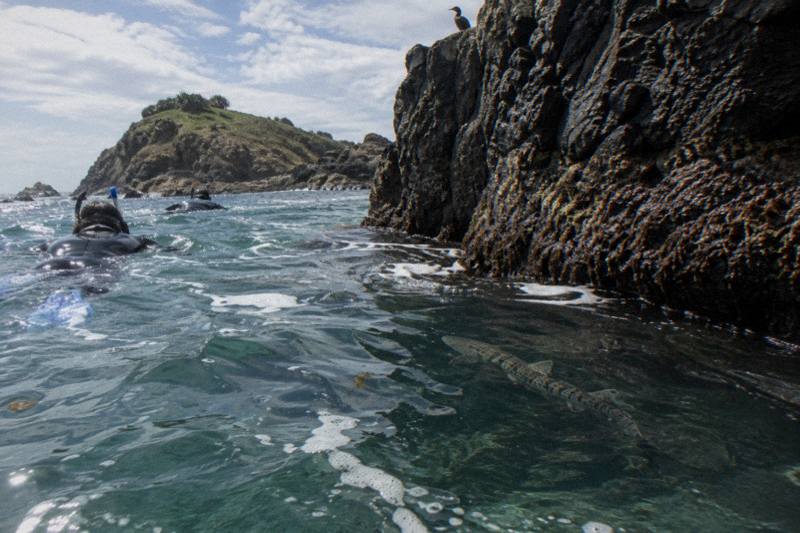
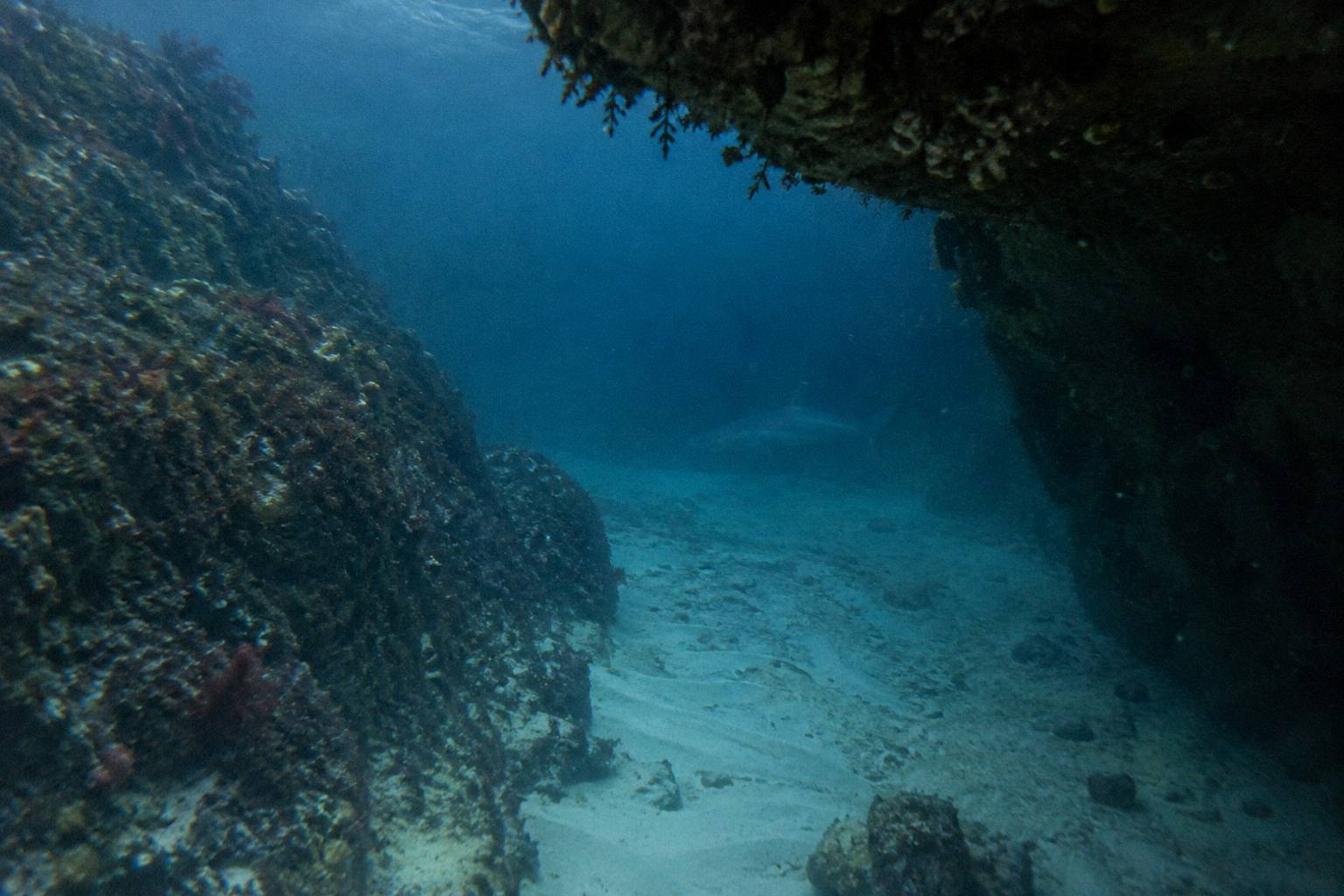
Sundive, whose dive-site page is the most detailed source, places the grey nurse sharks in the trenches during the colder months, June to November, and notes that in winter the trenches can be full of them. Those trenches are diving depths of 8 to 24 m. Snorkel trips, working shallow sheltered areas of 3 to 12 m, rarely see them. The shark's threatened-species listing appears in the Cape Byron Marine Park user guide, which also prohibits fish feeding, shark feeding included, anywhere in the marine park.
The rules that apply are regulatory: vessels keep to 4 knots within 200 m of the rocks, anchoring is banned within 700 m, and seven marine park moorings serve vessels up to 15 tonnes and 10 m on a two-hour maximum.
The warmer season belongs to different animals. Leopard sharks hold the Needles sandy arena mostly from December to April, manta rays appear in the summer months, and turtles, rays, nudibranchs, octopuses and eels run all year. Divers chasing the trench season need certification. Snorkellers get the year-round layer, and it is the busier one.
From The Boat Harbour To Nguthungulli: Where Julian Rocks Snorkelling Starts
Loading the map. Every place is also listed below.
Map tiles and place names: © OpenStreetMap contributors
- Nguthungulli Julian Rocks Nature ReserveAttraction
- Cape Byron LighthouseAttraction
- The Pass, Byron Bay (boat launch)Meeting Points
- Byron Bay Dive Centre / Turtle School meeting pointMeeting Points
- Sundive Byron Bay shopMeeting Points
- Brunswick Heads Boat Harbour (Harbour Way)Meeting Points
- Byron Bay Dive Centre, Marvell StreetMeeting Points
- Lawson Street kayak sheds, Byron BayMeeting Points
- Lance Ferris Wharf, BallinaMeeting Points
- Main Beach, Byron BayArea
- Clarkes Beach, Byron BayArea
- Byron Bay town centreArea
From The Boat Harbour To Nguthungulli
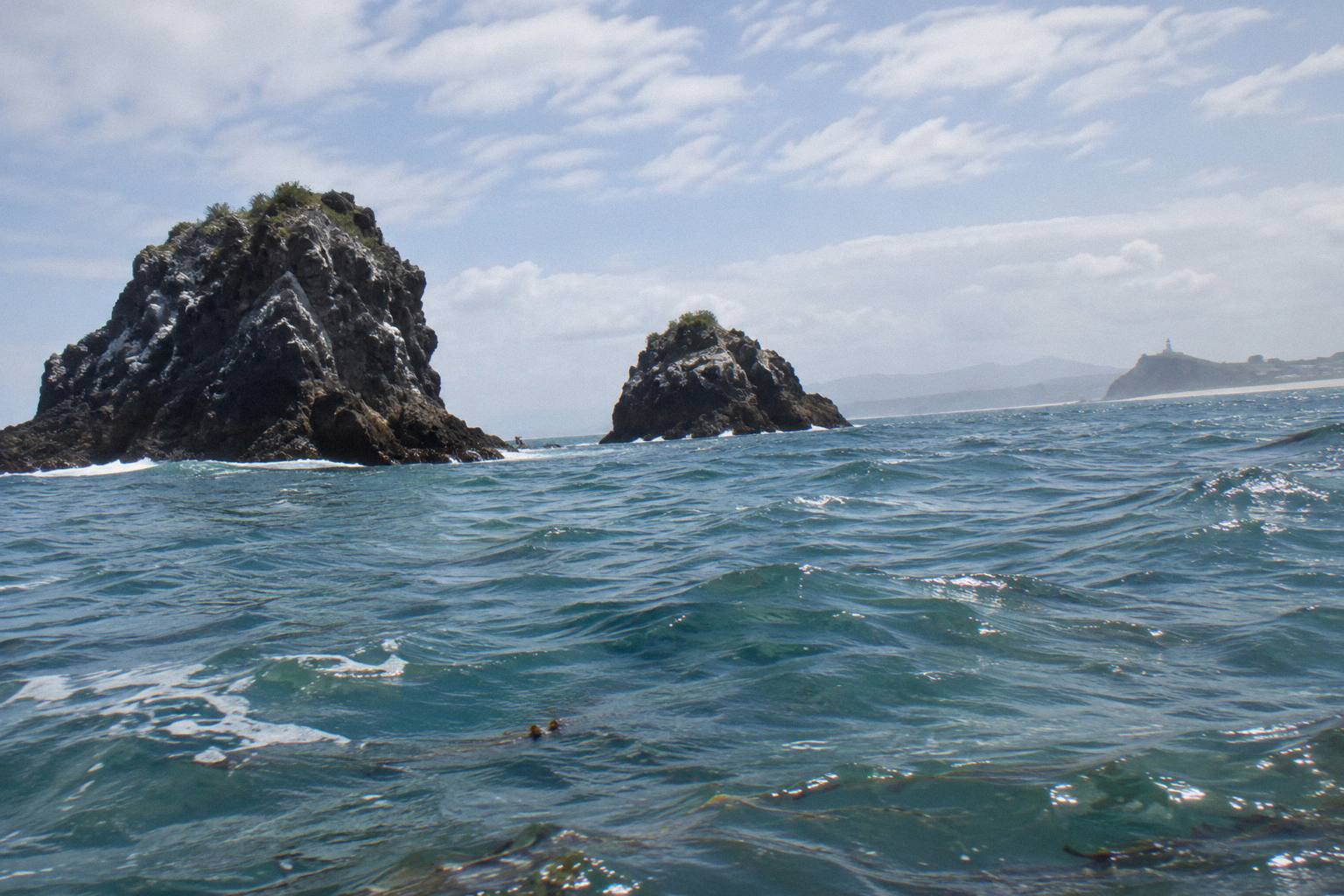
Nguthungulli Julian Rocks sits about 2.5 km offshore from Cape Byron, close enough that the crossing is measured in minutes rather than hours. Sundive puts the boat ride at about 5 minutes; Byron Bay Dive Centre says 5 to 10 minutes. Either way, the rocks themselves are two islets inside Cape Byron Marine Park, and the journey out is a short run over open water rather than a long haul.
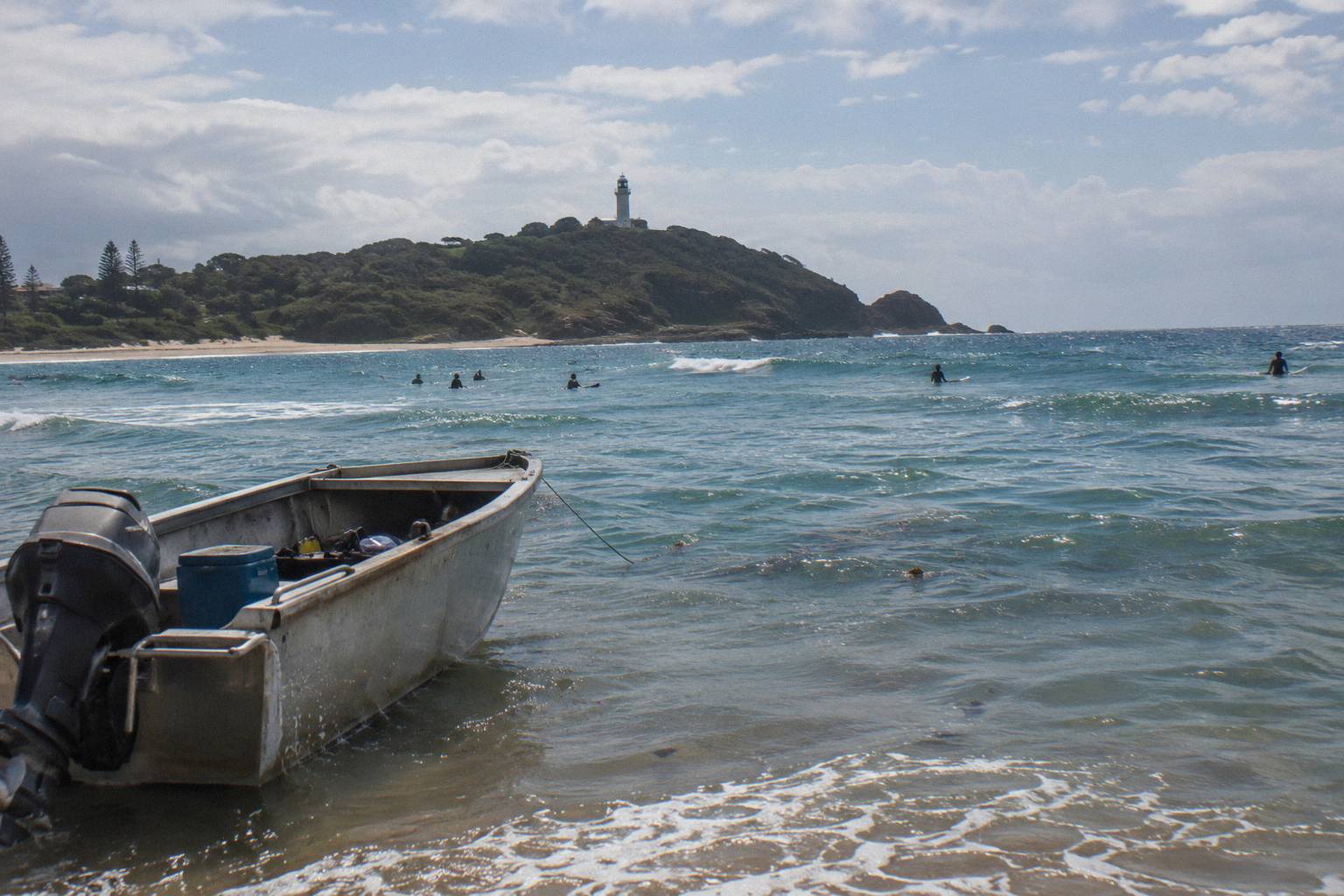
Two of the four snorkel trips on this roster begin further north. The Blue Seafaris and Out Of The Blue listings both give Brunswick Heads Boat Harbour as the meeting point, on Harbour Way, and both describe a 15-minute boat run each way to the rocks. That harbour start is the trade-off those trips make: a longer transit than a Byron Bay departure, in exchange for a sheltered boarding point and a run down the coast to the reserve. The pin map above shows the harbour, the town and the rocks in relation to each other.
The harbour listings run 2.5 hours door to door. With 15 minutes of boat each way plus briefing and gearing up, the shape of the trip is a short window in the water sandwiched between two crossings, which is standard for Julian Rocks snorkelling at any departure point. Checking the exact meeting instructions on the booking page before travel is worth the minute it takes, because the two departure zones, Brunswick Heads and Byron Bay town, are 15 minutes apart by road and easy to confuse.
The Byron Town Meeting Point, The Pass And The Name Of The Rocks
The Turtle School trip starts in Byron Bay itself. The listing gives Byron Plaza on Jonson Street as the meeting point; the operator's own FAQ instead names its dive store at 5 Marvell Street, and the two pages disagree. Travellers should treat the booking page as the final word on where to check in. From there the Byron Bay Dive Centre vessel departs from The Pass, with transport from the central meeting point to the launch included. No operator page places a snorkel launch at Main Beach or Clarkes Beach, so those beaches on the map are context, not departure points.
The setting matters more than the launch logistics. Cape Byron Marine Park runs about 37 km of coast from the Brunswick River north training wall to Lennox Head and covers about 220 km2 of state waters out to 3 nautical miles. It was established in November 2002, with zones and rules commencing in May 2006. The park sits where the East Australian Current meets cooler southern waters, a convergence that draws tropical and temperate species into the same small area and explains much of what Julian Rocks snorkelling is known for.
The name carries its own weight. Nguthungulli is the Bundjalung word for Father of the World, and the dual name Nguthungulli Julian Rocks was officially adopted in July 2023. Bundjalung lore, as reported, tells of a spear that broke a canoe in two, the halves becoming the rocks.
What Julian Rocks Snorkelling Costs On Each Listing
What Julian Rocks Snorkelling Costs On Each Listing
On the listings carried here, the entry point is the same for the two Brunswick Heads trips: from A$94 per person for both the Blue Seafaris 2.5-hour snorkel and the Out Of The Blue 2.5-hour trip. Both carry ratings on their listings, 4.5 from 448 reviews and 4.4 from 167 respectively. The Turtle School 3-hour trip and the Byron Bay Dive Centre turtle-focused snorkel from Byron town show no from-price on this site, because the underlying figures disagreed across reads; the table above records exactly what is and is not printed.
Nothing else should be inferred from the spread. A cheaper listing price does not mean a shorter trip by definition. Durations differ on their own axis: 2.5 hours for the Brunswick Heads trips and Wild Byron, 3 hours for Sundive and the Byron Bay Dive Centre trips.
What The Price Includes And What Happens If Plans Change
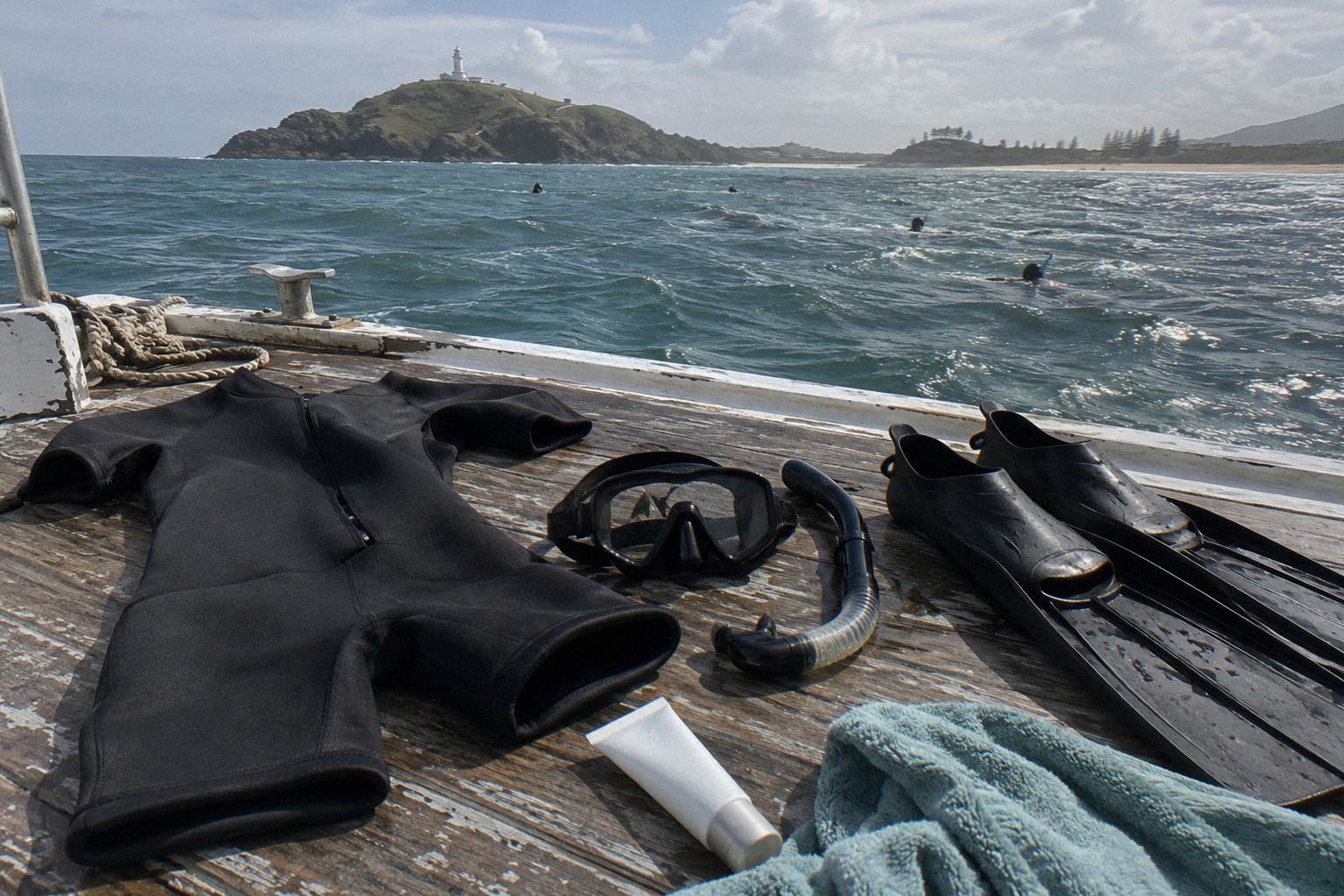
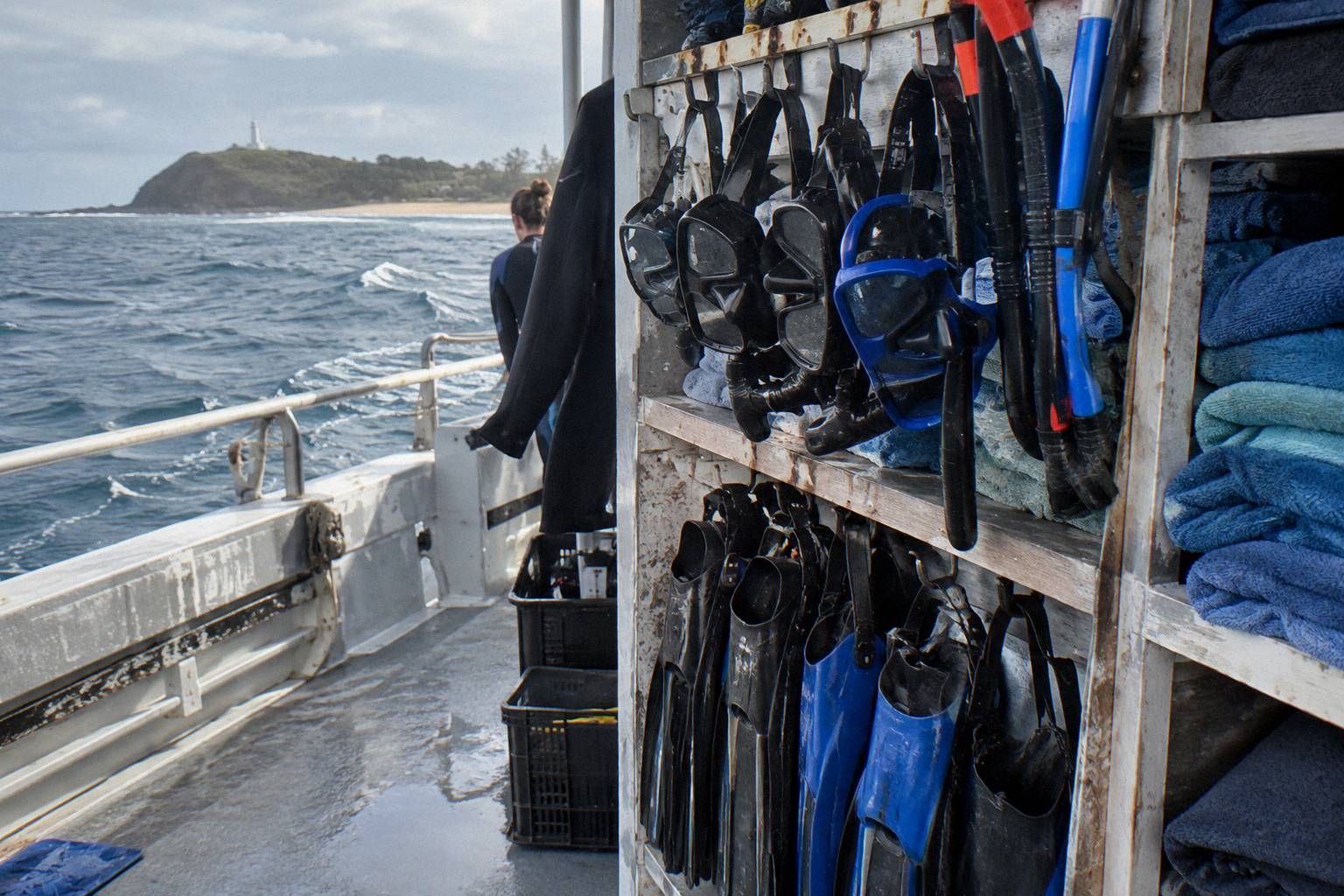
The standard inclusions across the trips cover the essentials. Sundive's price includes wetsuit, mask, fins and snorkel. The Byron Bay Dive Centre trip includes snorkel gear, a wetsuit and transport from the central meeting point to The Pass, which is worth knowing because it removes the question of how to reach the launch. Its FAQ recommends 5 mm long wetsuits for the duration of the trip and notes lifejackets on board, with a long wetsuit or pool noodle suggested for nervous snorkellers. Contact lenses are fine; prescription masks are not carried.
Fees and cancellation terms sit behind the headline number. Byron Bay Dive Centre notes that a booking fee is charged by the booking platform, so the amount paid at checkout can sit above the advertised from-price. Its cancellation window is 48 hours, with a 100 percent fee inside that window and a 7-day window for courses. Wild Byron advertises a 100 percent refund on cancellations up to 48 hours before, conditions applying. When weather or sea conditions are unsuitable, Byron Bay Dive Centre contacts guests by text or phone and offers a full refund or a reschedule; bookings made through an agent follow that agent's refund policy.
From-prices move with date and group for ordinary reasons. Seasonal demand, child versus adult places and group size all shift what a checkout shows, which is why every figure on this page is anchored to where it came from: the listing or the operator's own site.
Show
Sort by
All 7 tours, most reviewed first. Tap a sort chip twice to flip the order.
| Tour | Kind | Length | Meets | From | Rating | Book |
|---|---|---|---|---|---|---|
| Blue Seafaris, 2.5-Hour SnorkelBlue Seafaris | Julian Rocks Snorkel Tours | 2h 30m | Brunswick Heads Boat Harbour | A$94 per person | ★ 4.5448 reviews | Check availability |
| Out Of The Blue, Brunswick HeadsOut Of The Blue Adventures | Julian Rocks Snorkel Tours | 2h 30m | Brunswick Heads Boat Harbour | A$94 per person | ★ 4.4167 reviews | Check availability |
| Turtle School, 3-Hour SnorkelTurtle School (Byron Bay Dive Centre) | Julian Rocks Snorkel Tours | 3 - 4 hours | Byron Plaza, Jonson Street | Check availability | Check availability | |
| Turtle-Focused Snorkel From Byron TownByron Bay Dive Centre | Julian Rocks Snorkel Tours | 2h 30m | Byron Bay Dive Centre | Check availability | Check availability | |
| Guided Dolphin KayakCape Byron Kayaks | Byron Bay Marine Wildlife Tours | 2h 30m | Lawson St kayak sheds | Check availability | Check availability | |
| Sea Kayak, Dolphins And TurtlesGo Sea Kayak Byron Bay | Byron Bay Marine Wildlife Tours | 2h 30m | Lawson St kayak sheds | Check availability | Check availability | |
| Whale Watching, 2.5 HoursOut Of The Blue Adventures | Byron Bay Marine Wildlife Tours | 2h 30m | Ballina | Check availability | Check availability | |
| No tours match that combination. Set the Show chip back to All and all 7 tours come back. | ||||||
A Julian Rocks Snorkelling Morning, From Briefing To The Last Turtle
Step One: The Meeting Point And The Safety Briefing
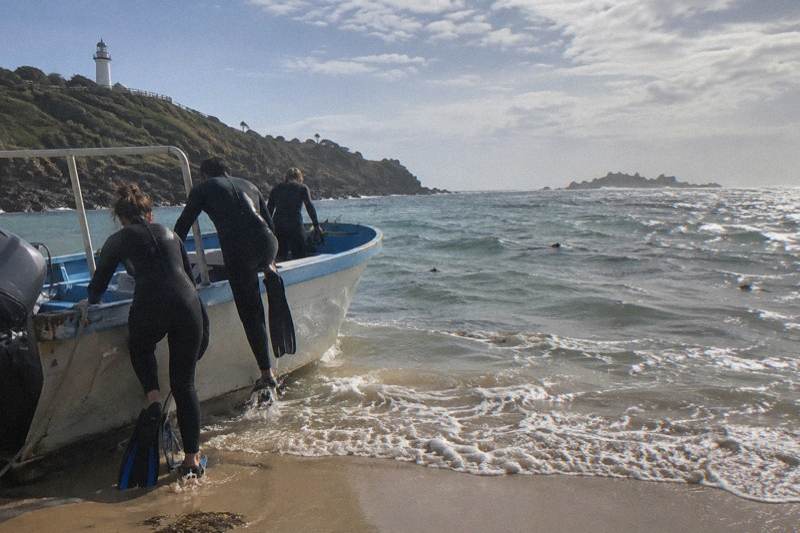
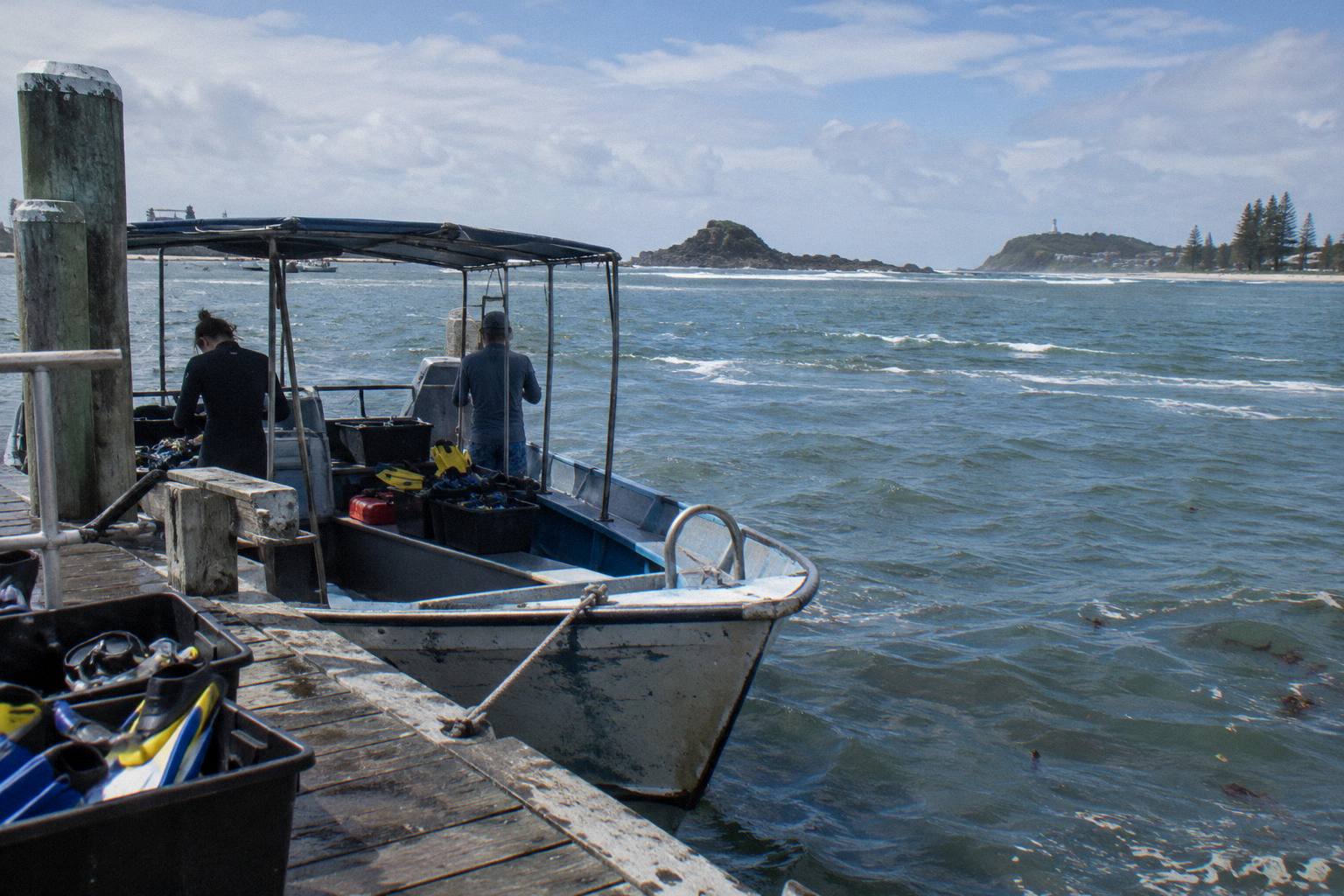
Where a Julian Rocks snorkelling morning starts depends entirely on the listing booked. Two of the trips compared here, Blue Seafaris and Out Of The Blue Adventures, meet at Brunswick Heads Boat Harbour on Harbour Way, about 15 minutes north of Byron Bay town. The Turtle School trips run by Byron Bay Dive Centre meet in town, at Byron Plaza on Jonson Street, from where transport carries passengers to The Pass for the vessel departure. Sundive checks its snorkellers in at its shop on Byron Street, entrance off Middleton Street.
The briefing covers the realities of an open-ocean site. Strong swells, currents, surges, cold water and winds are all possible at Julian Rocks, and operators are blunt about that before anyone boards. Swim ability is the central gate: Sundive requires previous open-ocean snorkelling experience and the ability to swim 200 m unassisted, while the Brunswick Heads listings likewise exclude non-swimmers. Byron Bay Dive Centre asks that all participants swim comfortably and feel at ease in the ocean. Anyone who cannot meet the swim standard does not go out, and the briefing is where that gets settled.
Step Two: Wetsuit, Mask And Fins
Gear is included across the board. Mask, snorkel, fins and wetsuit come with the Sundive trip; Byron Bay Dive Centre provides the same set plus transport from the central meeting point to The Pass. Wild Byron lists gear as included on its trip as well.
Thickness matters more than most first-timers expect. Byron Bay Dive Centre advises 5 mm long wetsuits for the duration of the trip, reflecting water that can drop to 17 °C in winter. A few practical notes from the Byron Bay Dive Centre FAQ: prescription masks are not carried, so contact lenses are the workaround; lifejackets are on board, and a long wetsuit or a pool noodle is suggested for nervous snorkellers; ginger seasickness tablets are on the boat, though bringing your own is recommended.
Minimum ages differ sharply between operators, so the booking page for the specific trip is the authority. Wild Byron takes children from 5, Sundive from 7, and Byron Bay Dive Centre from 10. There is no single Julian Rocks snorkelling age threshold.
Step Three: The Boat Run Out
The crossing is short. From Brunswick Heads Boat Harbour the run to Julian Rocks takes about 15 minutes each way, per the two listings. Vessels departing The Pass are close to the rocks within about 5 to 10 minutes by Byron Bay Dive Centre's account; Sundive puts its own crossing at about 5 minutes.
Approach rules kick in well before arrival. Vessels must slow to 4 knots within 200 m of the rocks, anchoring is banned within 700 m, and boats tie up at one of seven marine park moorings for a maximum of two hours. Fishing from a moored vessel is prohibited, as is rafting alongside another boat. That is why every Julian Rocks snorkelling trip arrives on a mooring rather than an anchor line, and it is worth watching the crew work through it.
Total trip durations reflect the differing start points: 2.5 hours on the Brunswick Heads listings, 3 hours for the Turtle School format, which builds in the town meeting and the drive to The Pass.
Step Four: In The Water With The Guide
Snorkelling at Julian Rocks happens in the shallow, sheltered areas, 3 to 12 m deep, away from the trenches and deeper dive sites. The Brunswick Heads listings, Blue Seafaris and Out Of The Blue, allow about 1.5 hours in the water on their 2.5-hour trips; Byron Bay Dive Centre and Sundive each structure their trips around about 1 hour of snorkel time. A marine biologist or naturalist guide leads on these trips, pointing out the site's residents rather than leaving snorkellers to find them alone.
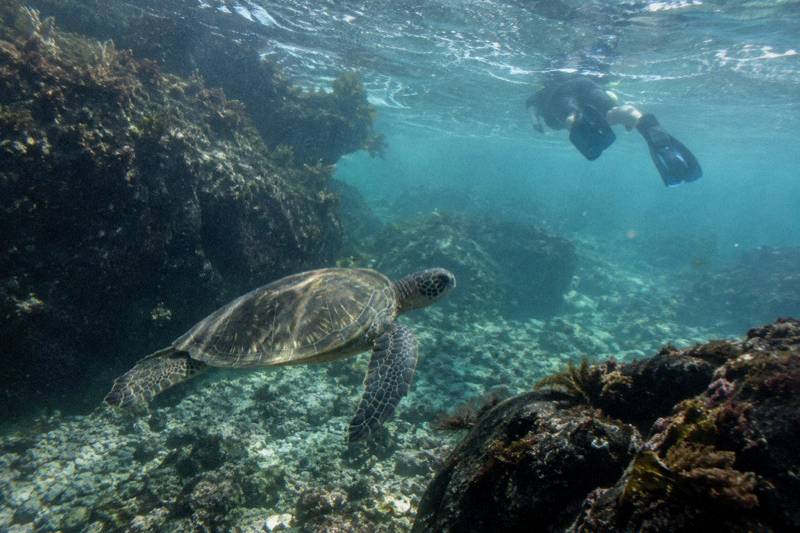
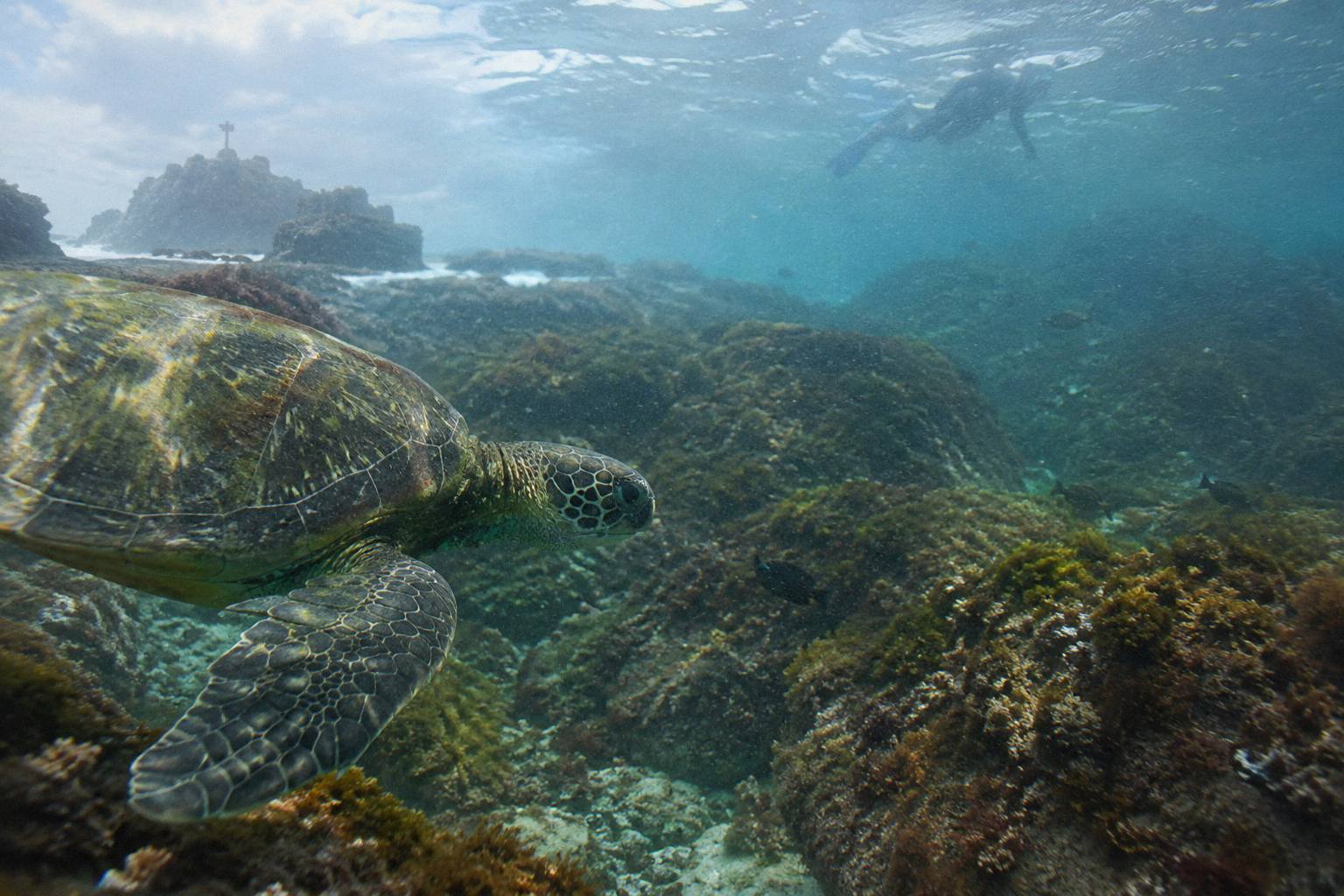
What shows up: turtles, rays, a variety of colourful fish and crustaceans, per Sundive's description of its snorkel trips. Green, hawksbill and loggerhead turtles are all recorded at the rocks year-round, and Byron Bay Dive Centre notes turtles can be spotted throughout the day. The same operator is equally clear that it cannot guarantee sea turtles will be there. They are common, not promised, and a Julian Rocks snorkelling session without one is entirely normal.
The deeper residents mostly stay out of reach. Grey nurse sharks gather in the sand trenches from June to November, but those trenches run 8 to 24 m down, scuba territory. Leopard sharks cluster at the Needles, a sandy arena, during the warmer months from December to April. Rays, wobbegongs, eels, nudibranchs and octopuses round out the cast. The number often quoted, more than 500 fish species or over 1000 marine species, is operator wording that reflects the convergence of the warm East Australian Current with cooler southern waters here.
Step Five: Back To Harbour, Sunscreen And Cameras
The return leg reverses the morning: off the mooring, the 4-knot zone, and the run back to Brunswick Heads or The Pass. Gear comes off, and the checklist items matter on the boat as much as in the water. Biodegradable sunscreen belongs on the packing list because the site sits inside a no-take sanctuary zone where every species is protected. Cameras are welcome, with conditions: Byron Bay Dive Centre allows waterproof cameras only, no flash, and its rules bar touching, collecting or harassing marine life in any form.
Conditions occasionally turn. The site is exposed to strong swells, currents, surges, cold water and winds, and strong northerlies blow between September and Christmas. When weather or sea state is unsuitable, Byron Bay Dive Centre contacts booked guests by text or phone and offers a full refund or a reschedule; its cancellation window is 48 hours, with the full fee applied inside it, and bookings made through an agent follow the agent's refund policy. Wild Byron advertises a full refund on cancellations up to 48 hours before, conditions applying. Reading the cancellation terms on the listing before booking is the simplest protection.
Afterwards there is little to do but dry off. The whole arc, briefing to boat to water to harbour, fits inside three hours on any of the four Julian Rocks snorkelling trips compared here.
Turtles, Leopard Sharks And Whales: Which Month Suits Julian Rocks Snorkelling
Jan Leopard sharks
Feb Leopard sharks
Mar Leopard sharks
Apr Leopard sharks
May Whale season opens
Jun Whales, grey nurse sharks
Jul Whales, grey nurse sharks
Aug Whales, grey nurse sharks
Sep Whales, strong northerlies
Oct Whales, strong northerlies
Nov Grey nurse sharks, northerlies
Dec Leopard sharks, northerlies
Turtles All Year, Never Guaranteed
The month strip above compresses a year at Julian Rocks into twelve cells, and the honest reading is that no month is empty. Green, hawksbill and loggerhead turtles are recorded at the rocks year-round, and Byron Bay Dive Centre says they can be spotted throughout the whole day. The same operator also states plainly that it cannot guarantee sea turtles will be there. Julian Rocks snorkelling is a strong turtle destination, not a contractual one, and any listing or review implying certainty overstates the case. Rays, crustaceans, nudibranchs, octopuses, eels and fish fill the water in every season, so a turtle-free session is still a populated one.
Leopard Sharks, December To April
Summer brings the site's most distinctive shallow-water visitor. Leopard sharks gather mostly at the Needles, a sandy arena, during the warmer months from December to April, per Sundive. That window overlaps with manta rays, which Sundive lists among summer months' sightings. For snorkellers, whose trips stay in the shallow sheltered areas from 3 to 12 m, the leopard shark months are the strongest argument for a warm-season booking.
Grey Nurse Sharks, June To November
The cooler months belong to the endangered grey nurse shark, which Sundive reports in the sand trenches during colder months from June to November, sometimes filling them. Snorkellers should temper expectations: those trenches run roughly 8 to 24 m deep, dive territory, and grey nurse sharks are rarely seen from the surface. Winter trips trade the leopard shark chance for cooler water and, outside the snorkel itself, the humpback migration passing the coast. The choice of month for Julian Rocks snorkelling is really a choice between warm-water shallow species and cold-water ones that mostly stay below.
Whale Season, Two Versions
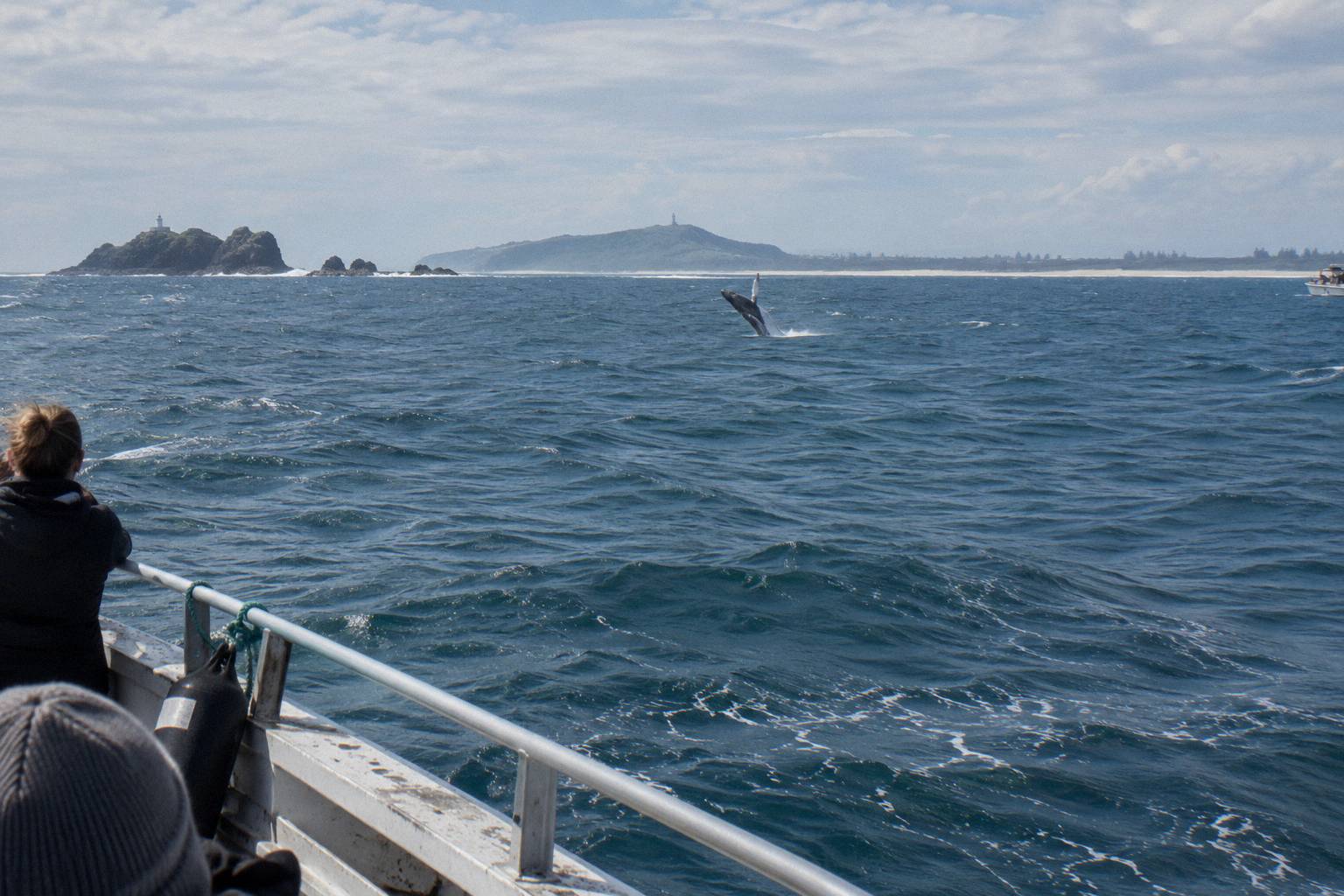
Humpback whales pass Cape Byron on migration, and the two local operators state different seasons. Sundive runs whale trips between May and November; Byron Bay Dive Centre lists whale watching from June to October. The month strip shows the two ranges side by side rather than picking one, because there is no single official window to print. Note the boundary of the claim: these are dedicated whale watching trips. No Julian Rocks snorkelling trip claims to see whales, so whales are a reason to book a separate trip, not an add-on to the snorkel.
Winter Water And September Northerlies
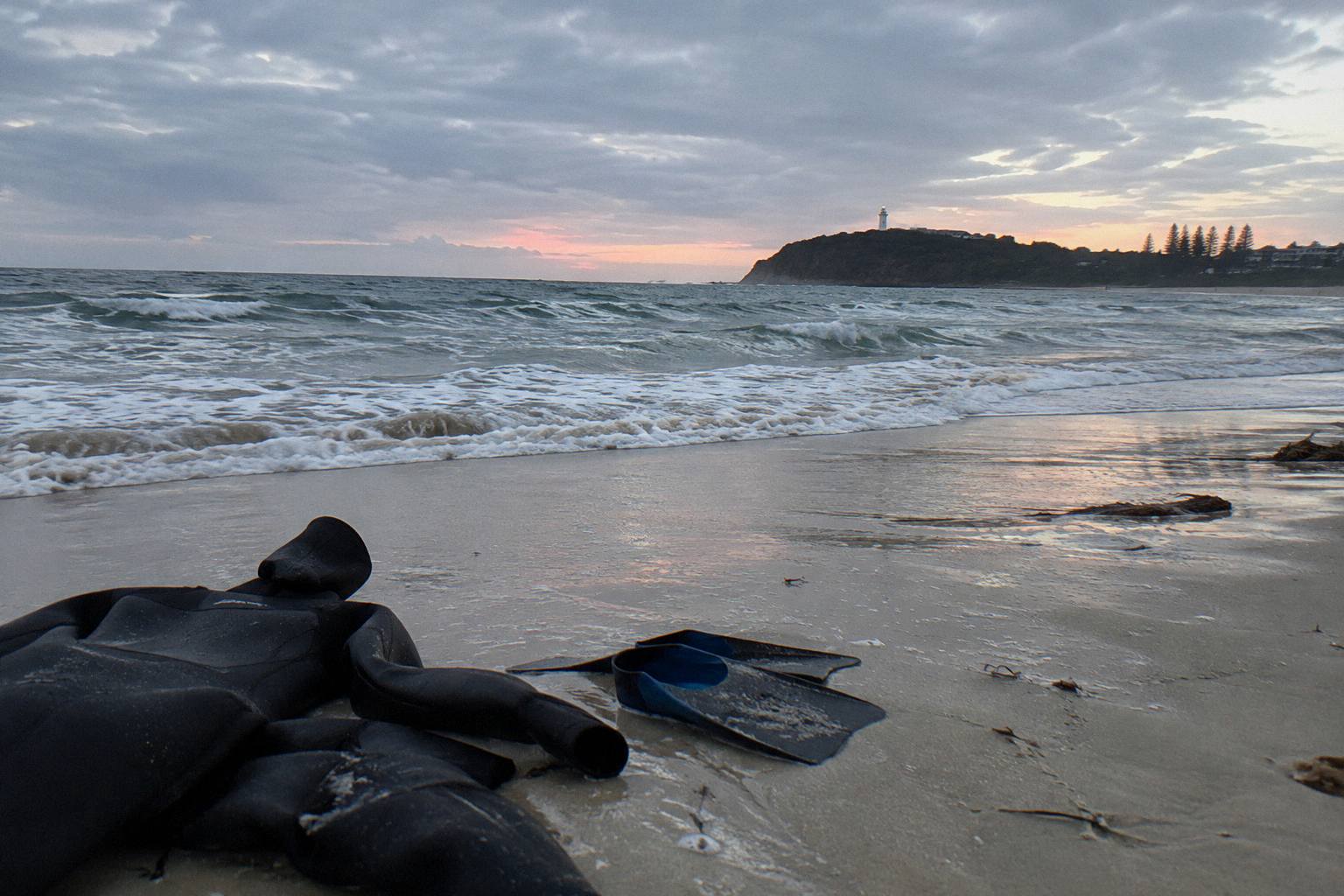
Water temperature shapes comfort more than calendar month does. The only sourced figure is Sundive's: winter water can drop to 17 °C, with an average of about 20 °C. That is why 5 mm long wetsuits are advised, and why gear is included on every trip compared here. No monthly water-temperature table is printed on this site, because no official monthly series for the exact location was found.
Wind is the other variable. Sundive flags strong northerlies between September and Christmas, a stretch that overlaps the tail of whale season and the start of leopard shark months. On top of that, Julian Rocks is an open-ocean site where strong swells, currents, surges, cold water and winds are all possible at any time of year. Operators cancel or reschedule when the sea does not cooperate, and Byron Bay Dive Centre contacts guests by text or phone with a full refund or a new date. Building a spare day into a Byron itinerary absorbs that risk without cost.
Practical summary: book summer for leopard sharks and mantas, winter for grey nurse territory below and whales offshore, any month for turtles that may or may not appear.
Four Knots And 700 Metres: The Sanctuary Rules Behind Julian Rocks Snorkelling
Vessel Speed Within 200 m 4 knots
Anchoring None within 700 m
Moorings Seven, 2 hours maximum
Fishing And Collecting Banned in sanctuary zones
Feeding Fish, Including Sharks Prohibited
Snorkelling And Diving Permitted
Four Knots Within 200 Metres
The rules around Nguthungulli Julian Rocks come from the Cape Byron Marine Park user guide, and they shape every trip listed on this page. Any vessel within 200 m of the rocks must slow to 4 knots. Anchoring is banned within 700 m, and no anchoring is allowed on any reef inside a sanctuary zone.
Instead of anchors, seven Marine Parks moorings sit at Julian Rocks. Each serves vessels up to 15 tonnes or 10 m, usable in winds of 24 knots or less, with a 2-hour maximum stay. No fishing from a moored vessel, and no rafting up alongside another boat on one.
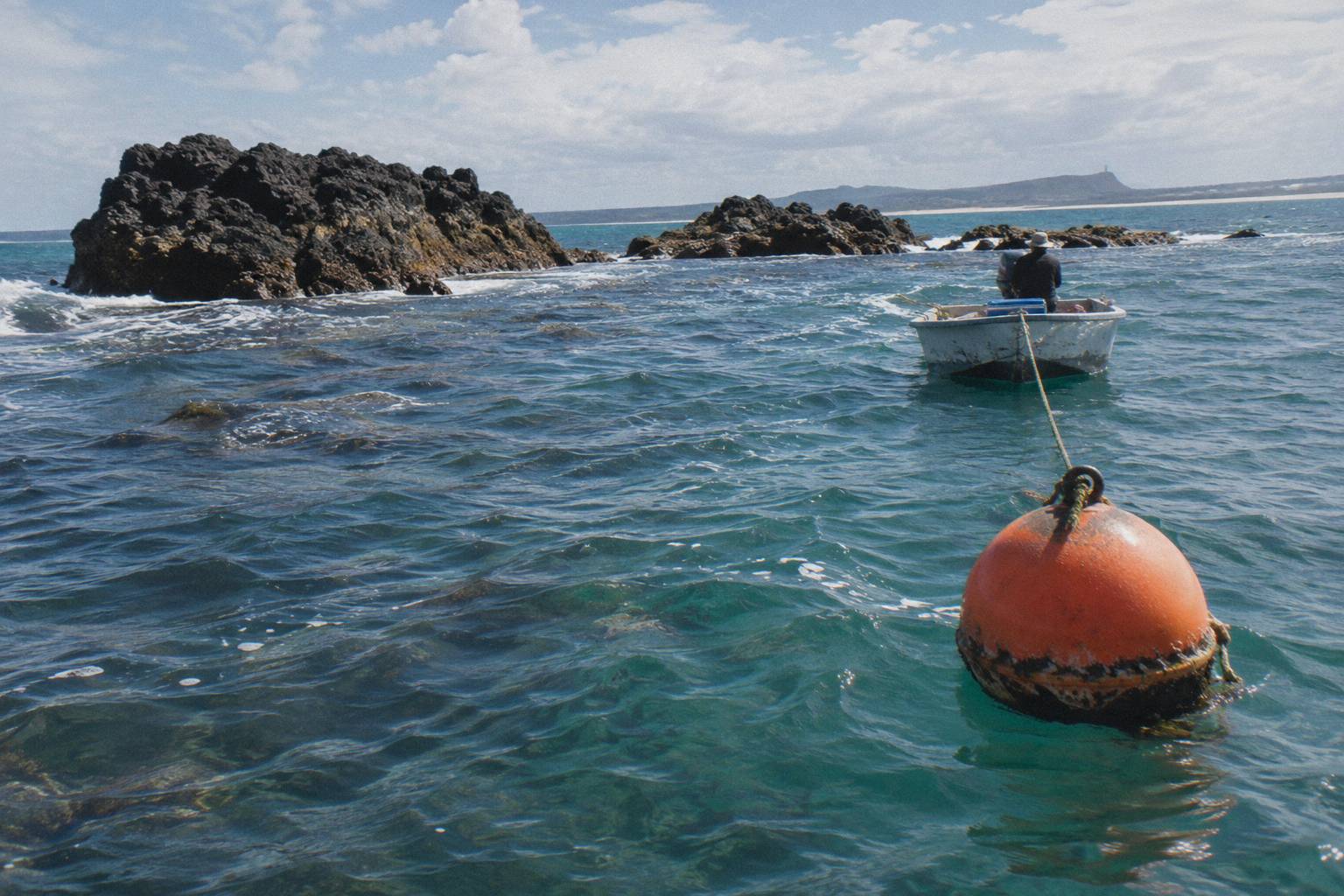
For snorkellers, the practical effect is simple: trips arrive on a mooring, drift in the shallows and leave the reef exactly as found. The ring graphic above sets out each limit at a glance.
No-Take, No Feeding, No Touching
The sanctuary zones are the strictest in the marine park. Fishing and collecting are banned outright, all species are protected, and fish feeding is prohibited, explicitly including shark feeding. Nothing may be taken from the water, and the rules exist because the site holds sharks, rays, turtles, eels, starfish and corals, in the words of the NSW marine park agency.
Snorkelling and diving are permitted, alongside boating and surfing, because these activities do not harm any animal, plant or habitat. That permission carries an expectation. The user guide names grey nurse sharks among the park's threatened species, and Byron Bay Dive Centre's own guidance is blunt: do not touch, collect or harass marine life. Waterproof cameras are fine, flash is not.
Out of the water, the NSW Government listing records the rocks themselves as a bird sanctuary, with gulls, terns, tattlers, cormorants and plovers among the residents. Julian Rocks snorkelling works as an activity precisely because visitors keep their hands to themselves.
Swim Test, Wetsuit And Age Limits: Who Can Do Julian Rocks Snorkelling
- Wild ByronBelow the stated minimum ageOperator site; must swim
- SundiveBelow the stated minimum age200 m unassisted in open ocean; over 65 need GP clearance
- Byron Bay Dive CentreBelow the stated minimum ageMust swim; pregnancy and back or spinal injuries excluded
- Blue Seafaris And Out Of The Blue ListingsBelow the stated minimum age200 m unassisted; non-swimmers and over 70 excluded
- Wild ByronMeets the stated minimum ageOperator site; must swim
- SundiveMeets the stated minimum age200 m unassisted in open ocean; over 65 need GP clearance
- Byron Bay Dive CentreBelow the stated minimum ageMust swim; pregnancy and back or spinal injuries excluded
- Blue Seafaris And Out Of The Blue ListingsMeets the stated minimum age200 m unassisted; non-swimmers and over 70 excluded
- Wild ByronMeets the stated minimum ageOperator site; must swim
- SundiveMeets the stated minimum age200 m unassisted in open ocean; over 65 need GP clearance
- Byron Bay Dive CentreMeets the stated minimum ageMust swim; pregnancy and back or spinal injuries excluded
- Blue Seafaris And Out Of The Blue ListingsMeets the stated minimum age200 m unassisted; non-swimmers and over 70 excluded
Minimum Ages Differ By Operator
There is no single age floor for Julian Rocks snorkelling, and any site claiming one is oversimplifying. Wild Byron sets its minimum at 5, with child pricing for ages 5 to 12. Sundive sets it at 7, covering ages 7 to 15 as children, and requires kids aged 7 to 18 to be accompanied by an adult guardian. Byron Bay Dive Centre sets it at 10, with its child rate applying to ages 10 to 17.
The table above places these operator rules side by side. Treat each row as that operator's own policy rather than a site-wide standard, because the gaps are wide: a 6-year-old can join Wild Byron but not the other two, and an 8-year-old clears Sundive's bar but not Byron Bay Dive Centre's.
The two Brunswick Heads listings on this roster carry their own listing terms instead: children under 7 are excluded, and every guest must be able to swim 200 m unassisted. Check the booking page for the trip you actually choose, since the operator pages and the listings are separate documents with separate rules.
Swim Tests, Wetsuits And Seasickness
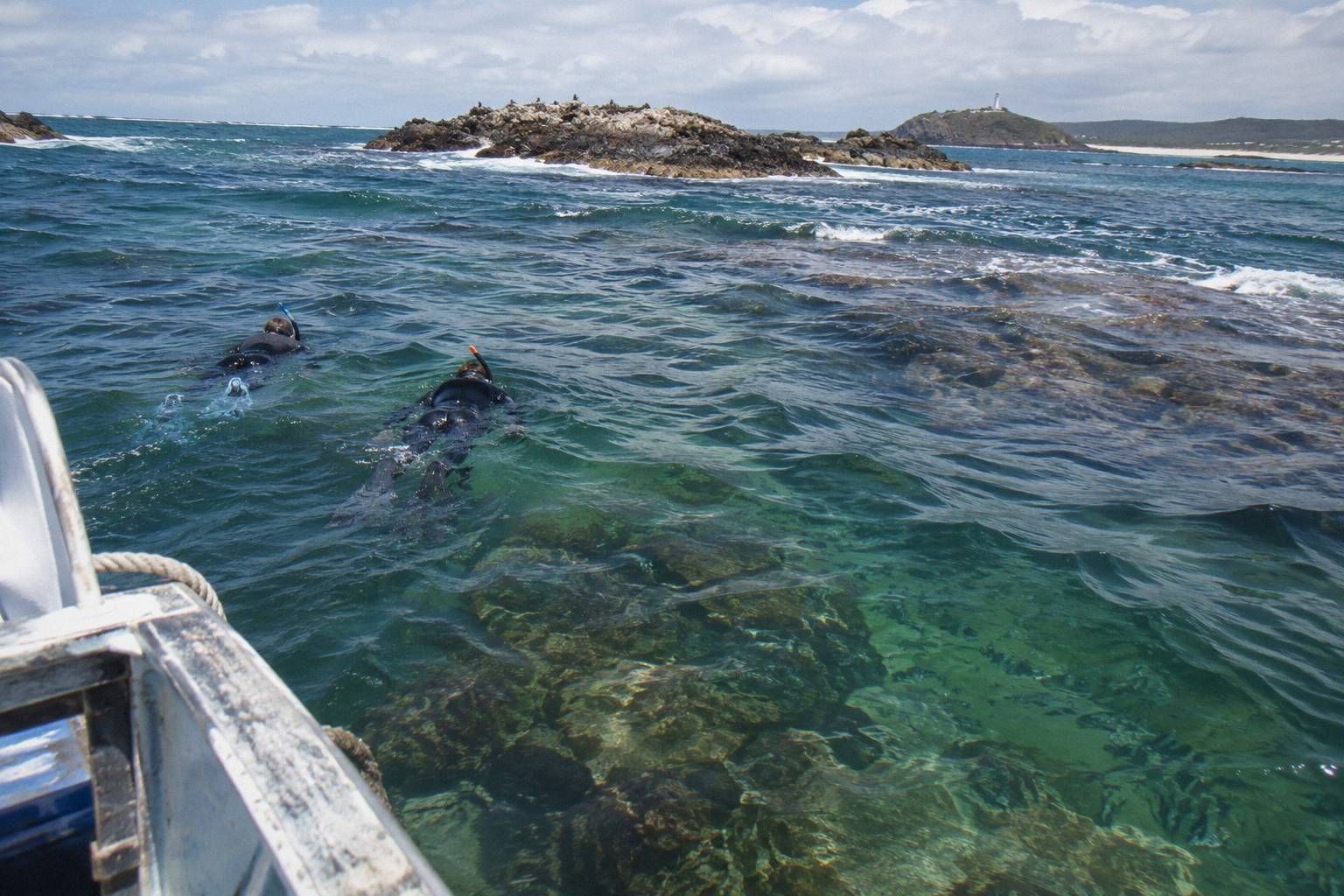
Swim ability is the gatekeeper on every trip, and Sundive states the toughest standard. Previous open-ocean snorkelling experience is mandatory there, plus the ability to swim 200 m unassisted in open ocean. Guests over 65 need GP clearance. Byron Bay Dive Centre asks that all participants swim comfortably and feel comfortable in the ocean.
Gear varies less. Sundive includes wetsuit, mask, fins and snorkel. Byron Bay Dive Centre includes the same set plus transport from its central meeting point to The Pass, and its 5 mm long wetsuits are advised for the duration of the trip. It supplies no prescription masks, so contact lenses are the workaround. Lifejackets are on board, and a long wetsuit or a pool noodle is suggested for nervous snorkellers.
Two cautions worth repeating. Ginger seasickness tablets are carried on the Byron Bay Dive Centre boat, but bringing your own is recommended for anyone prone to it. And the pregnancy and back or spinal injury exclusion is strictly that operator's rule for vessel-based activities; it is not stated by the others.
Dolphin Kayaks, Sea Kayaks And Whale Boats To Pair With Julian Rocks Snorkelling
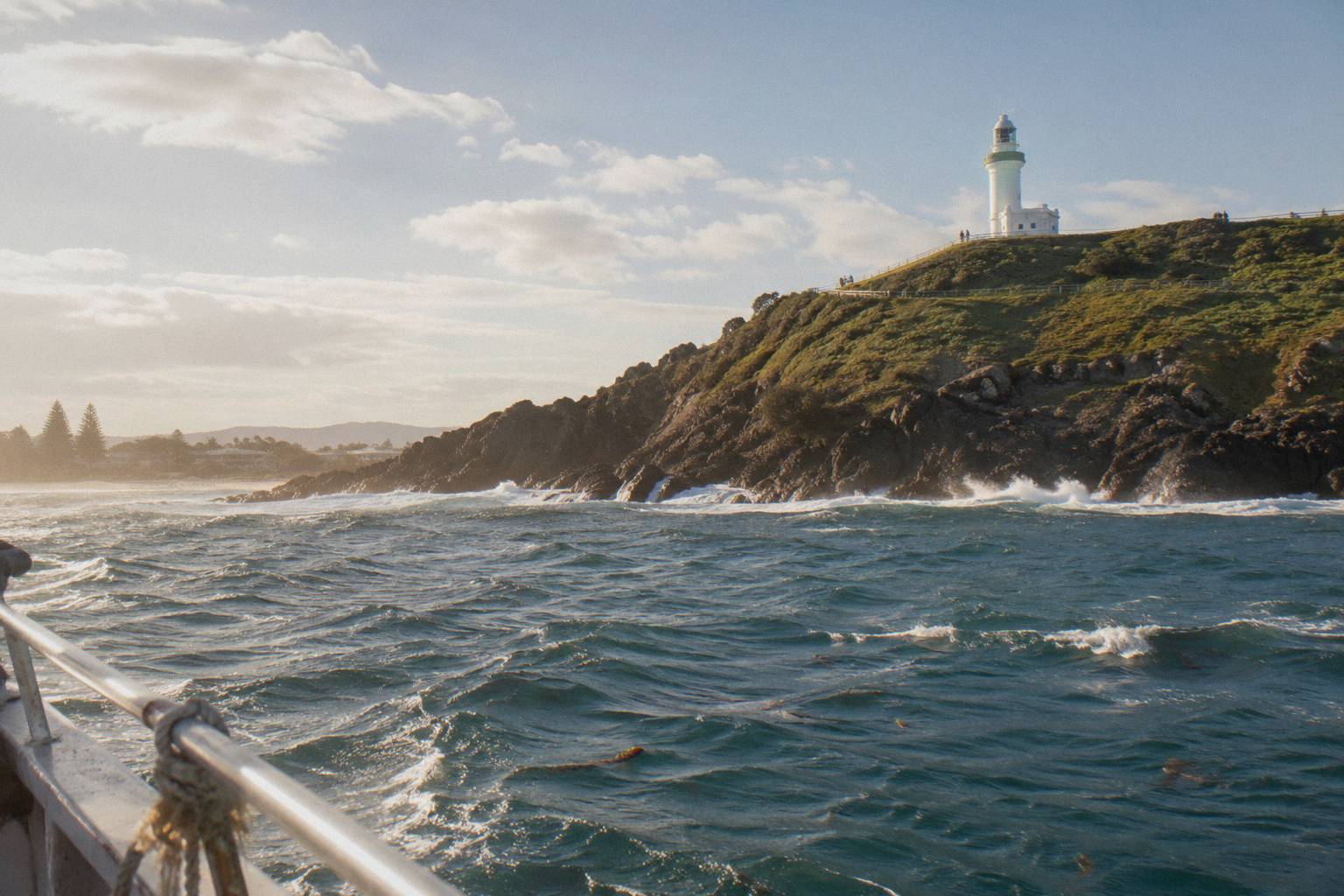
Listed Length2 hours 30 minutesper the listing
ProviderCape Byron Kayaksnamed on the listing
Trip TypeAdjacentbooked separately
Three Adjacent Wildlife Trips
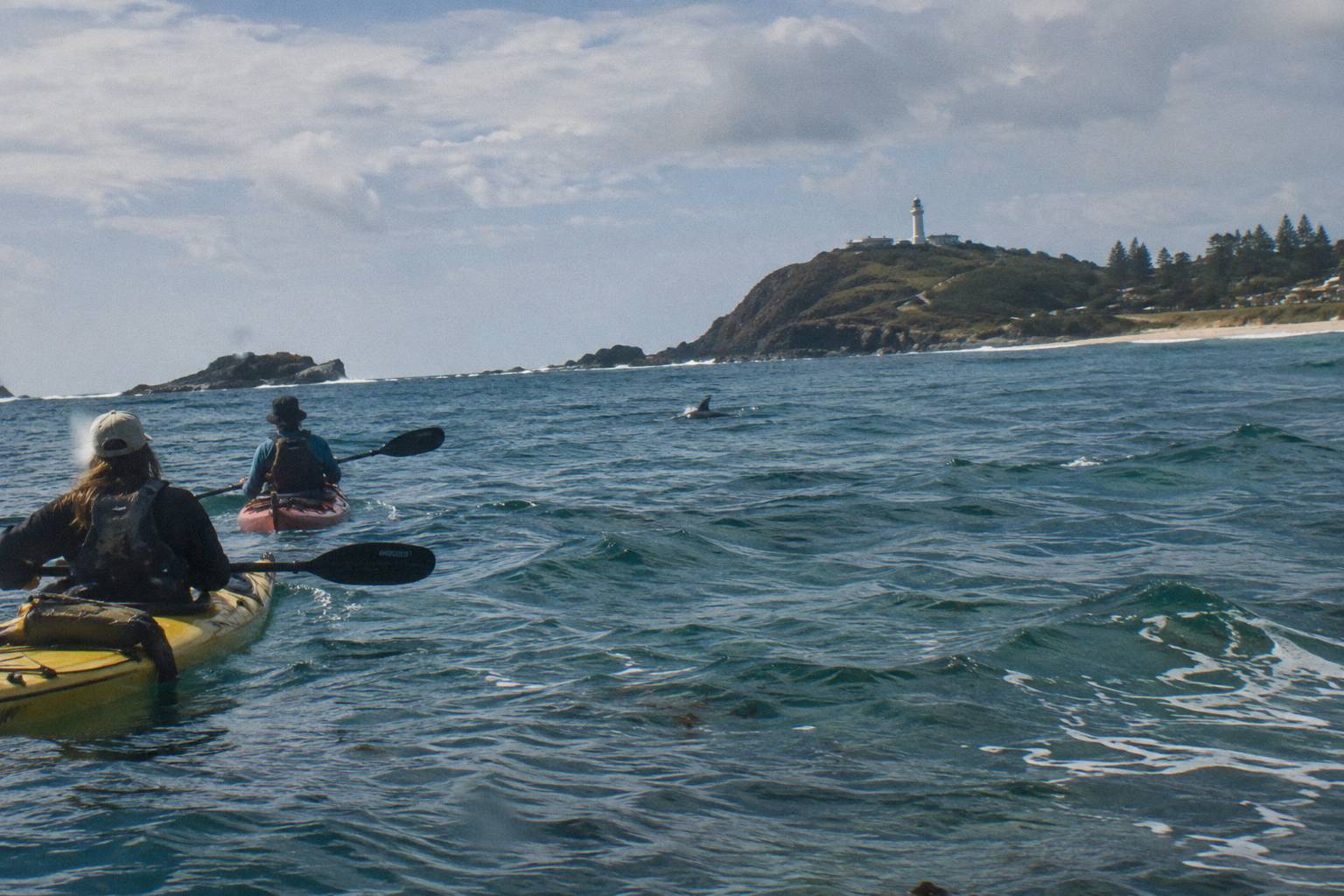
These three are adjacent marine wildlife tours, not Julian Rocks snorkelling, and they are sold as separate listings. First, a guided dolphin kayak with Cape Byron Kayaks, 2.5 hours. Second, a sea kayak trip from Go Sea Kayak Byron Bay pitched at dolphins and turtles, also 2.5 hours, inside Cape Byron Marine Park. Third, a whale watching trip with a marine biologist on board through Out Of The Blue Adventures, again 2.5 hours.
The durations make pairing straightforward. A 2.5-hour trip slots neatly against a half-day snorkel without stretching the day, and the map pins show the separate departure points for each. No prices or ratings print here because the roster carries none for these three; whatever the current figure is shows on the booking page.
Kayaks stay on the surface and work the nearer waters; the whale boat covers open water in season. All three reward booking early in a Byron Bay stay, since sea state decides which days work best.
Listed Length2 hours 30 minutesper the listing
ProviderGo Sea Kayak Byron Baynamed on the listing
Trip TypeAdjacentbooked separately
Pairing By Season
The seasonal logic follows the operator facts. Sundive runs whale trips between May and November; Byron Bay Dive Centre lists whale watching June to October. The two windows differ, so the months to trust for a whale pairing are the overlap, June to October, when both operators are on the water. No snorkel trip claims whales, which is exactly why the whale watch earns its place as a second booking.
Dolphins and turtles appear in the kayak trip names themselves, and turtles are listed at the rocks year-round, though never guaranteed. A morning of Julian Rocks snorkelling followed by an afternoon kayak is a realistic shape for one day, given both run about 2.5 to 3 hours.
Each activity is a separate listing with its own operator, meeting point and cancellation terms, so a second trip means a second booking rather than an add-on at the jetty.
Listed Length2 hours 30 minutesper the listing
ProviderOut Of The Blue Adventuresnamed on the listing
Trip TypeAdjacentbooked separately
Latest Data, November 2026
| Trip | From-Price, AUD | Listing Rating |
|---|---|---|
| Blue Seafaris, 2.5-Hour Snorkel | A$94 | 4.5 from 448 reviews |
| Out Of The Blue, Brunswick Heads | A$94 | 4.4 from 167 reviews |
What The Listings Show Now
The comparison table above prints only what the listings themselves show. Blue Seafaris carries a 4.5 rating from 448 reviews at a from price of A$94. Out Of The Blue carries a 4.4 from 167 reviews, also from A$94. Both list at 2.5 hours from Brunswick Heads Boat Harbour. That is the full set of confirmed figures.
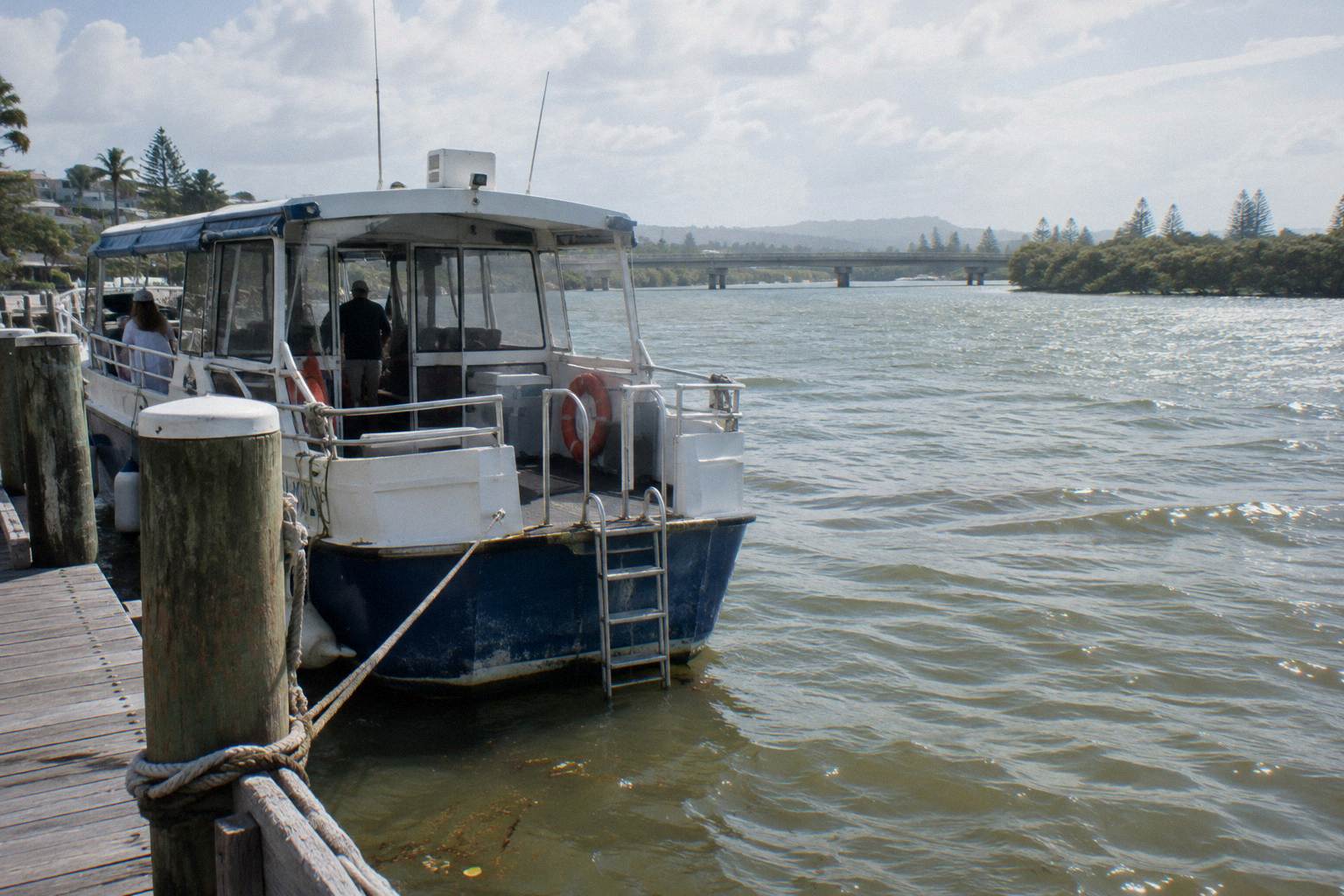
Every other number, including both Turtle School rows and the Byron Bay Dive Centre listing, shows as not shown here because the reads disagreed. For those, the current price, rating and availability sit on the booking page at the moment you open it.
Listing data moves. Prices shift with season and demand, ratings accumulate, and inventory changes, so treat this table as a snapshot and the booking page as the live record.
Where To Stay Near Julian Rocks Snorkelling
Where To Base Yourself
The right base depends on which trip you book. The Turtle School snorkel meets at Byron Plaza on Jonson Street in the Byron Bay town centre, so a stay in town puts the meeting point within an easy walk. The Blue Seafaris and Out Of The Blue trips start at Brunswick Heads Boat Harbour, 15 minutes by boat from the rocks, and staying at Brunswick Heads itself puts you beside the departure point.
The three hotel cards below cover the spread: an upper tier near Wategos Beach on Marine Parade, a mid-range option on Shirley Street, and a budget pick on Carlyle Street. All three areas sit in or beside Byron Bay, close to the town meeting points.
One distinction matters: the 15-minute figure is boat time from the harbour to the rocks, not a road time. Nobody on this site has measured the drive, so plan the journey on the map pins above rather than any quoted transfer length.
Rae's On Wategos
Marine Parade, Wategos Beach, Byron Bay
Check ratesByron Beachcomber Resort
23-25 Shirley Street, Byron Bay
Check ratesByron Bay YHA
7 Carlyle Street, Byron Bay
Check ratesJulian Rocks Snorkelling FAQ
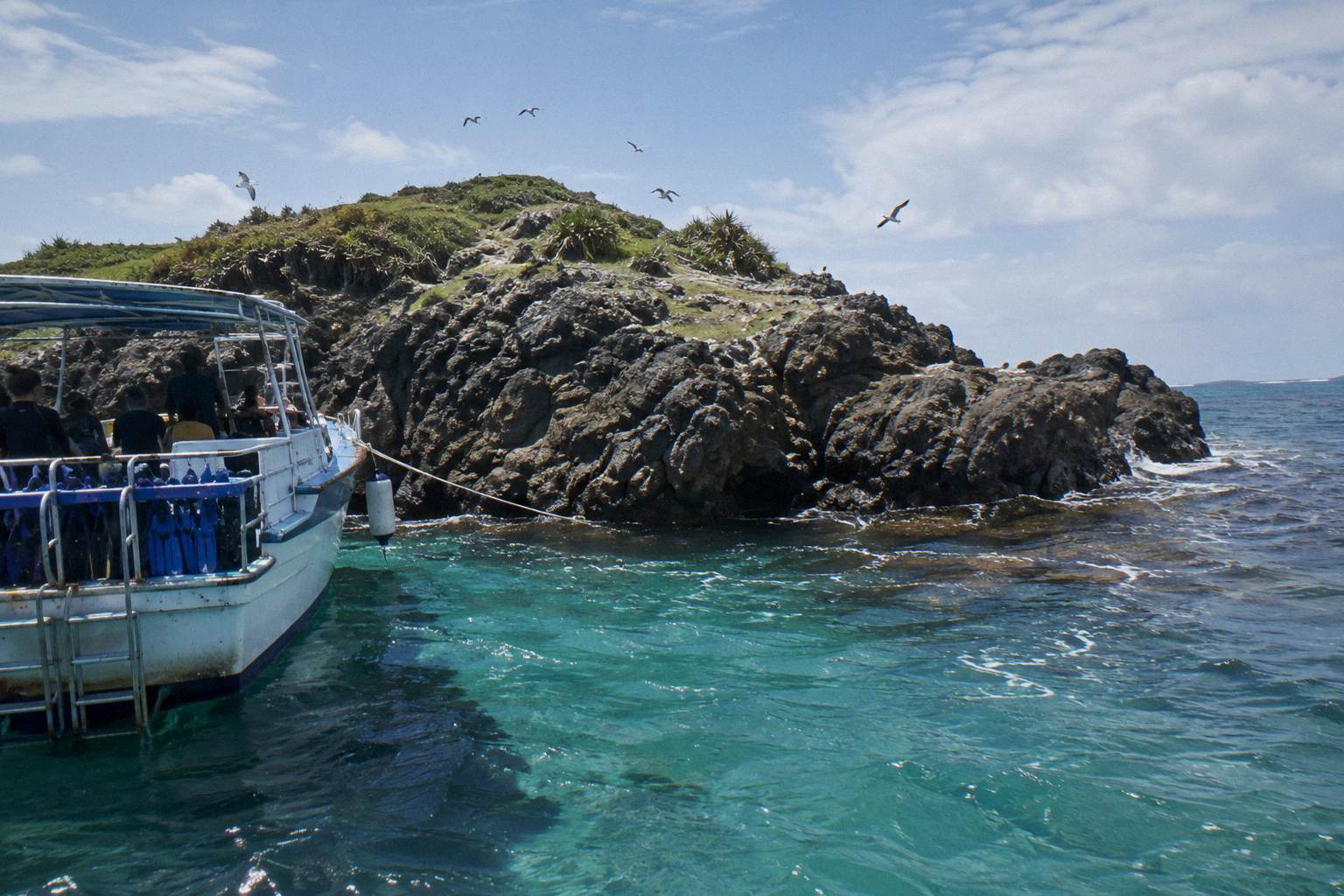
Where Do Julian Rocks Snorkel Boats Leave From?
It depends on the operator. Byron Bay Dive Centre vessels depart from The Pass, with transport from its central Byron meeting point, and Sundive checks in at its Byron Street shop. The Blue Seafaris and Out Of The Blue listings both give Brunswick Heads Boat Harbour as the meeting point, about 15 minutes north of Byron Bay by road. No operator page states a Main Beach or Clarkes Beach launch. The booking page confirms the exact address.
How Long Is The Trip And How Long In The Water?
Listed durations differ. The Brunswick Heads listings, Blue Seafaris and Out Of The Blue, run 2.5 hours. Turtle School and the Byron Bay Dive Centre turtle-focused trips are 3 hours. Time in the water is about 1 hour on the Byron-based operators' pages, and 1.5 hours on the Brunswick Heads listings. Sundive runs about 3 hours total with about 1 hour of Julian Rocks snorkelling.
Will I See Turtles?
Turtles are common but never guaranteed. Green, hawksbill and loggerhead turtles are listed as present year-round, and Byron Bay Dive Centre says they can be spotted year-round throughout the whole day. The same operator states plainly that it cannot guarantee sea turtles will be there. Snorkel trips visit shallow sheltered areas, 3 to 12 m deep, where turtles, rays, colourful fish and crustaceans are the draw.
What Is The Minimum Age?
There is no single minimum, because operators set their own. Wild Byron takes children from 5. Sundive sets the minimum at 7, with 7 to 18 year olds needing an adult guardian in the water. Byron Bay Dive Centre sets 10, with its child rate covering 10 to 17. Check the booking page for the trip being considered.
Do I Need To Be A Strong Swimmer?
Yes, every operator sets a real swimming standard. Out Of The Blue Adventures requires a 200 m unassisted swim before booking, and crew remove snorkellers who cannot manage it, with no refund. The Turtle School (Byron Bay Dive Centre) Julian Rocks tour likewise asks for 200 m unassisted in open ocean. Blue Seafaris asks that you be comfortable swimming in open water, offering pool noodles rather than flotation jackets for non-swimmers. The separate Byron Bay Dive Centre sea turtle tour sets its bar at 25 m unassisted, with no life jackets to snorkel in.
Is A Wetsuit Included?
On the Byron-based operators, yes. Sundive includes wetsuit, mask, fins and snorkel in its price, and Byron Bay Dive Centre includes the full gear set with a 5 mm long wetsuit advised for the duration of the trip. Its FAQ also suggests a long wetsuit or a pool noodle for nervous snorkellers. The Brunswick Heads listings state gear is included, per the listing detail. No prescription masks are offered by Byron Bay Dive Centre; contact lenses are fine.
Which Month Is Best For Sharks Or Whales?
For leopard sharks, Sundive reports the warmer months, December to April, mostly at the Needles sandy arena, and summer brings manta rays. Grey nurse sharks appear in the colder months, June to November. Whale watching seasons differ by operator: Sundive runs whale trips May to November, Byron Bay Dive Centre lists June to October. Note that no snorkel trip claims to see whales; whales are a separate boat trip.
Can I See Grey Nurse Sharks While Snorkelling?
Rarely. Sundive places grey nurse sharks in the sand trenches during colder months, June to November, at diving depths of 8 to 24 m, which sit below snorkel range. The shallow sheltered areas used for Julian Rocks snorkelling, 3 to 12 m deep, are where turtles, rays, fish and crustaceans are seen instead. Divers in the trenches are the ones who find them. No approach distance figure appears in the official sources.
What If The Weather Cancels The Trip?
Byron Bay Dive Centre contacts guests by text or phone if weather or sea conditions are unsuitable, offering a full refund or a reschedule. Its standard cancellation window is 48 hours, with a 100 percent fee inside it, and agent bookings follow the agent's policy. Wild Byron advertises a 100 percent refund on cancellations up to 48 hours before, conditions applying. The Brunswick Heads listings do not state terms; the booking page shows them.
Is Pregnancy A Problem?
For Byron Bay Dive Centre, yes. Its tour page excludes guests who are pregnant or who have back or spinal injuries from all vessel-based activities. That restriction belongs to that operator and is not generalised to the others here. Wild Byron and Sundive state no equivalent rule on the pages read, and the Brunswick Heads listings are silent on it. Anyone in this situation should confirm directly with the operator before booking.
What Is The Nguthungulli Name?
Nguthungulli is the Bundjalung word for Father of the World, and the dual name Nguthungulli Julian Rocks was officially adopted in July 2023. The site is a nature reserve, and the NSW Government page describes it as a bird sanctuary for gulls, terns, tattlers, cormorants and plovers. Reported Bundjalung lore tells of a spear breaking a canoe in two, the halves becoming the rocks.
What Are The Marine Park Rules?
Nguthungulli Julian Rocks sits inside Cape Byron Marine Park in a sanctuary zone where fishing, collecting and reef anchoring are banned. Vessels must slow to 4 knots within 200 m and must not anchor within 700 m. Seven moorings serve vessels up to 15 tonnes and 10 m, with a 2 hour maximum and no fishing from a moored vessel. Fish feeding, including shark feeding, is prohibited. Snorkelling is permitted.
Is Out Of The Blue On Both Platforms?
The same Out Of The Blue Adventures experience appears listed in two places, and this roster carries one booking page for it rather than both. On the listing carried here the trip is priced from A$94 per person, rated 4.4 from 167 reviews, running 2.5 hours from Brunswick Heads Boat Harbour. Out Of The Blue also sells direct. The choice of listing does not change the trip itself.
Snorkel Or Scuba At Julian Rocks?
Snorkel trips work the shallow sheltered areas, 3 to 12 m deep, with about 1 hour in the water and a comfortable-swimmer requirement. Scuba reaches the trenches at 8 to 24 m, where grey nurse sharks gather from June to November, but the Fun Dive costs more and needs Open Water certification. Julian Rocks snorkelling suits casual swimmers; scuba suits certified divers chasing the deeper shark season.
Julian Rocks Snorkelling Guides To Read Before Booking
Guides
 Best Month
 Choosing An Operator
 Diving Guide
 Dolphins Guide
 From Brisbane
 Gold Coast Day Trip
 Gold Coast Or Byron Bay
 Grey Nurse Sharks
 Julian Rocks Guide
 Kayak Vs Snorkel
 Kids On The Trip
 Leopard Sharks
 Marine Life
 Marine Park Rules
 Near Brisbane
 Nguthungulli Reserve
 Sharks For Snorkellers
 Snorkel Day Timeline
 Snorkel Or Dive
 Snorkel Packing List
 Trip Cost
 Turtles At Julian Rocks
 Visibility By Season
 Water Temperature
 Whale Season And Snorkelling
Answers
- Best Dive Month
- Can You Snorkel It?
- Distance To The Rocks
- Fitness For Snorkelling
- Grey Nurse Safety
- Is It Safe?
- Nervous First-Timers
- Non-Swimmers Guide
- Sea Conditions Checklist
- Seasickness Guide
- Snorkel Colours
- Snorkel Mistakes
- Snorkel Sites
- Snorkel Spots Near Byron
- Snorkel Water Depth
- Swim From The Beach?
- Touching Turtles
- Turtles, Sharks And Rays
- Weather Cancellations
- Wetsuits At Julian Rocks
- When To Book
- Winter Water At Byron